Sidewalk Trip Hazards: When Grinding Works and When a Slab Has to Go
We measure every sidewalk hazard before quoting. Grind what is sound, replace what is not. Request a complimentary on-site inspection today.
10 min read
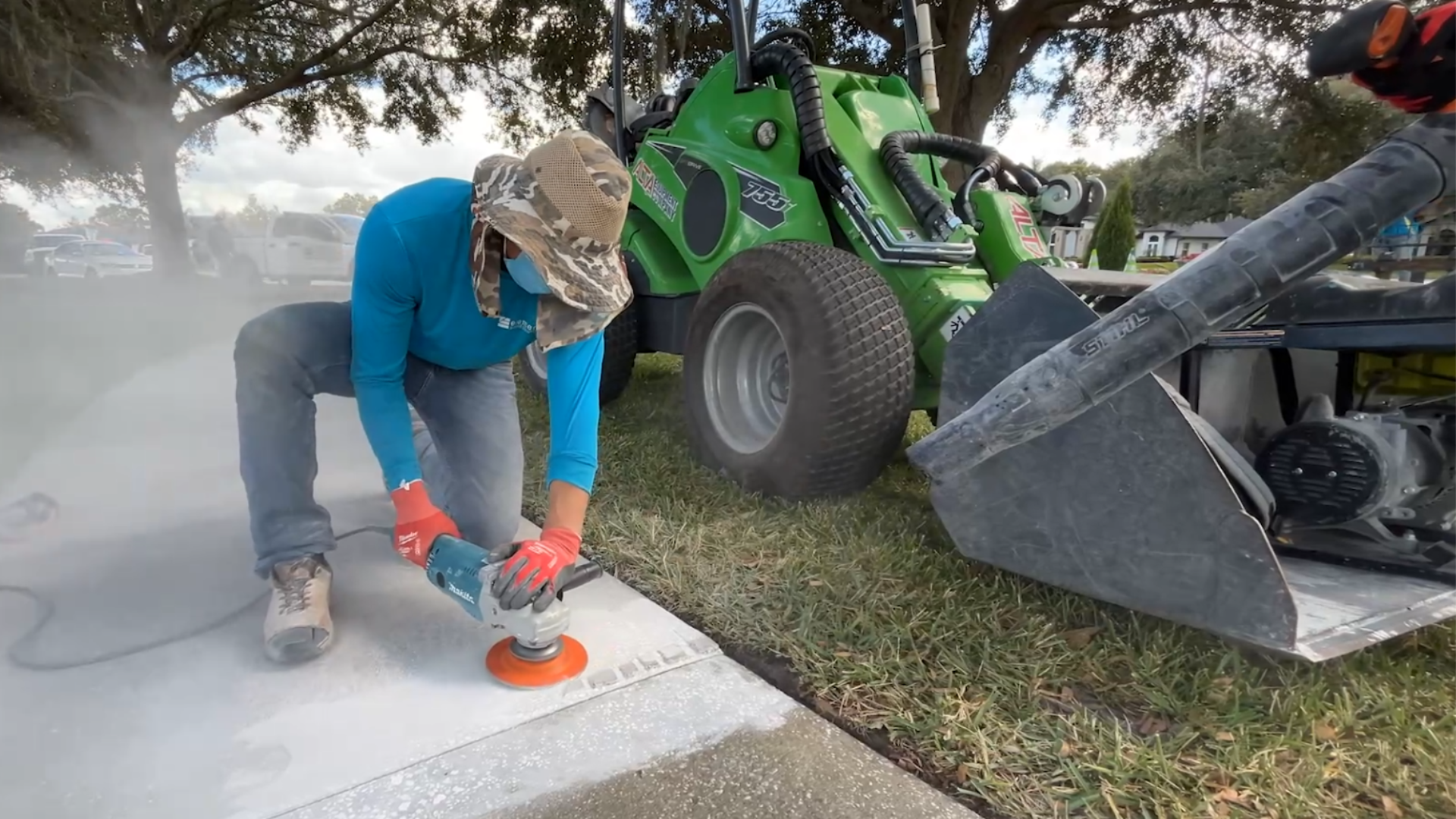
Boards approve sidewalk grinding, then wonder what the day itself will look like. Here is the whole visit, from crew arrival to reopened walkways, usually measured in hours rather than days.
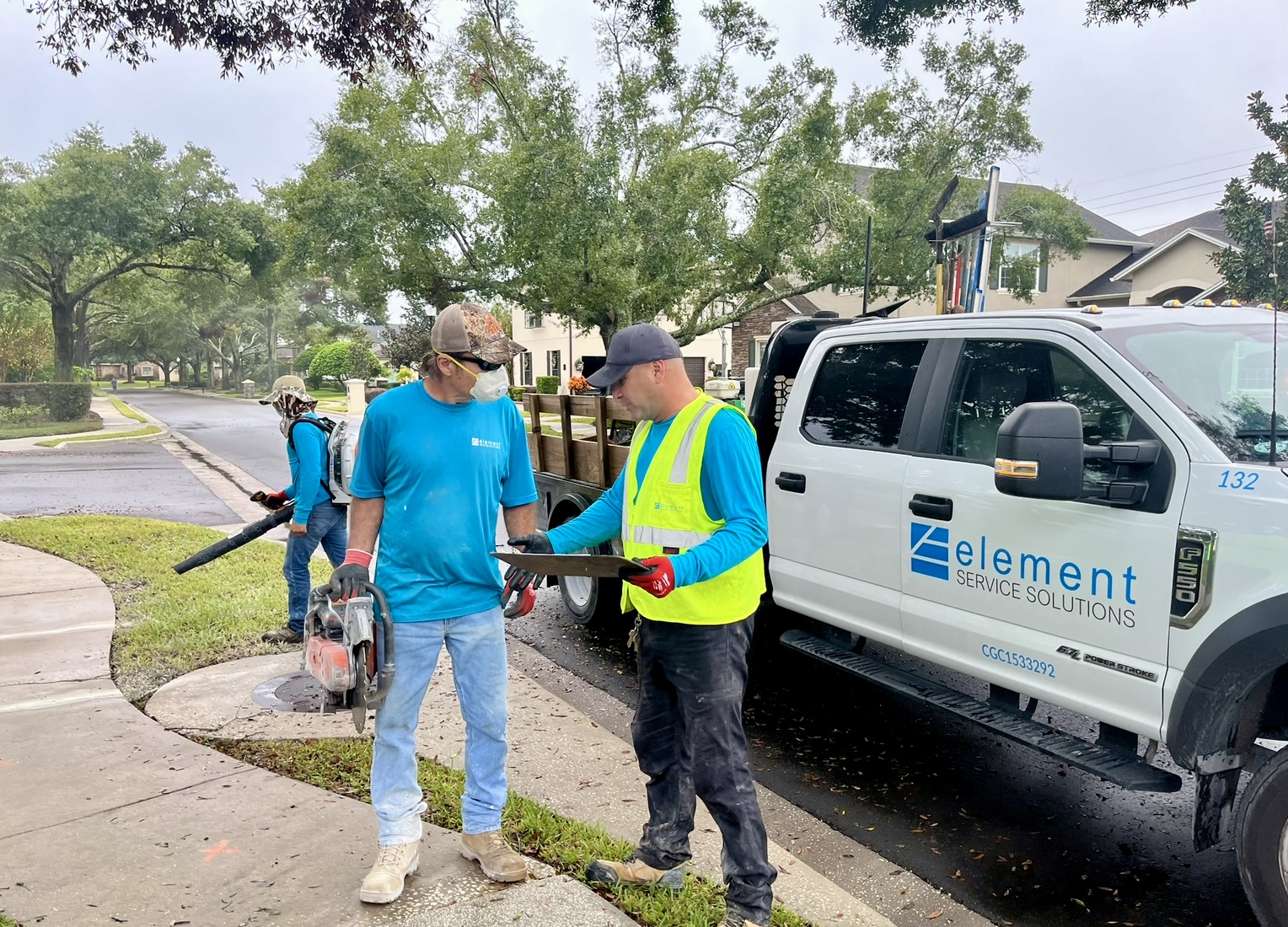
A grinding visit starts before grinding day. Every hazard should already be identified, marked, and measured from the inspection, so the crew arrives with a list of specific locations rather than instructions to "look around." That hazard-by-hazard survey is also how the grind candidates were separated from the panels that need full replacement. If your community has not made that call yet, start with our guide to when grinding works and when a slab has to go. This article assumes that decision is made.
Resident notice can stay light. Unlike replacement work, grinding needs no one to move a car out of a driveway and no section of sidewalk roped off for days. A short note that crews will be working along the walkways is usually all a community needs to send.
Because grinding needs so little disruption, most communities only need two short notices. Adapt the wording below to your community's usual notice format and channel.
"Element Service Solutions will be on property [date] performing sidewalk grinding to correct raised joints identified during our recent walk-through. Work involves compact grinding equipment only. No sections of sidewalk will be closed, and no resident parking is affected. Please use normal caution around crews while they are working."
"A reminder that sidewalk grinding continues today near [general area, e.g. the pool walkway and Building 4]. Walkways remain open; please give crews a few feet of space as you pass."
"Sidewalk grinding is complete for this cycle. [Number] hazards were addressed. Any hazards identified for full replacement will be scheduled separately and residents will be notified ahead of that work."
Keeping the three notices short and factual avoids over-promising a specific finish time, since a larger hazard count can extend the visit into a second day.
The equipment footprint is the first thing that surprises people. Grinding is done with compact grinders brought to each hazard, supported by a small machine like a mini skid steer to move gear along the route. There is no concrete truck idling in a resident's parking space, no dumpster on the grass, and no staging area eating a corner of the lot for a week.
That matters on tight properties. Townhome streets, pool paths, and courtyard walkways that could never host a replacement operation comfortably can host a grinding crew without residents rearranging their day.
Grinding concrete produces fine dust, and controlling it is part of the job, not an optional courtesy. Crews manage it at the point of contact, using vacuum shrouds on the grinder or water to suppress dust as the edge comes down, and clean each spot as they finish it.
Ask any vendor how they handle dust before you book the visit. The answer should be specific. Homes, parked cars, and pool decks sit close to community sidewalks, and a crew without a dust plan turns a repair day into a complaint day. It is the same kind of process question we recommend in our list of questions to ask any contractor before hiring one.
A closed sidewalk section is more than an inconvenience for some residents. A resident using a walker, cane, or wheelchair may have exactly one accessible route between a building entrance and a pool, mailbox, or parking space. Closing that route for a multi-day replacement project, even with a clearly marked detour, can turn a routine repair into a real barrier for the people who need the walkway most.
Grinding avoids that trade-off entirely. Because there is no cure time and no demolition, the route in question is only briefly narrowed while a crew is actively working that exact spot, then fully open again. For a hazard that qualifies for grinding under the criteria in our grind-vs-replace guide, that makes it the option that fixes the safety problem without creating a temporary access problem in its place. Boards planning a repair cycle around a known accessible route should factor this in when deciding which hazards to prioritize first.
Here is the heart of the method. Nothing is demolished and nothing is hauled away. The crew grinds the raised edge of the lifted panel down flush with its neighboring panel, turning a trip edge into a smooth, walkable transition.
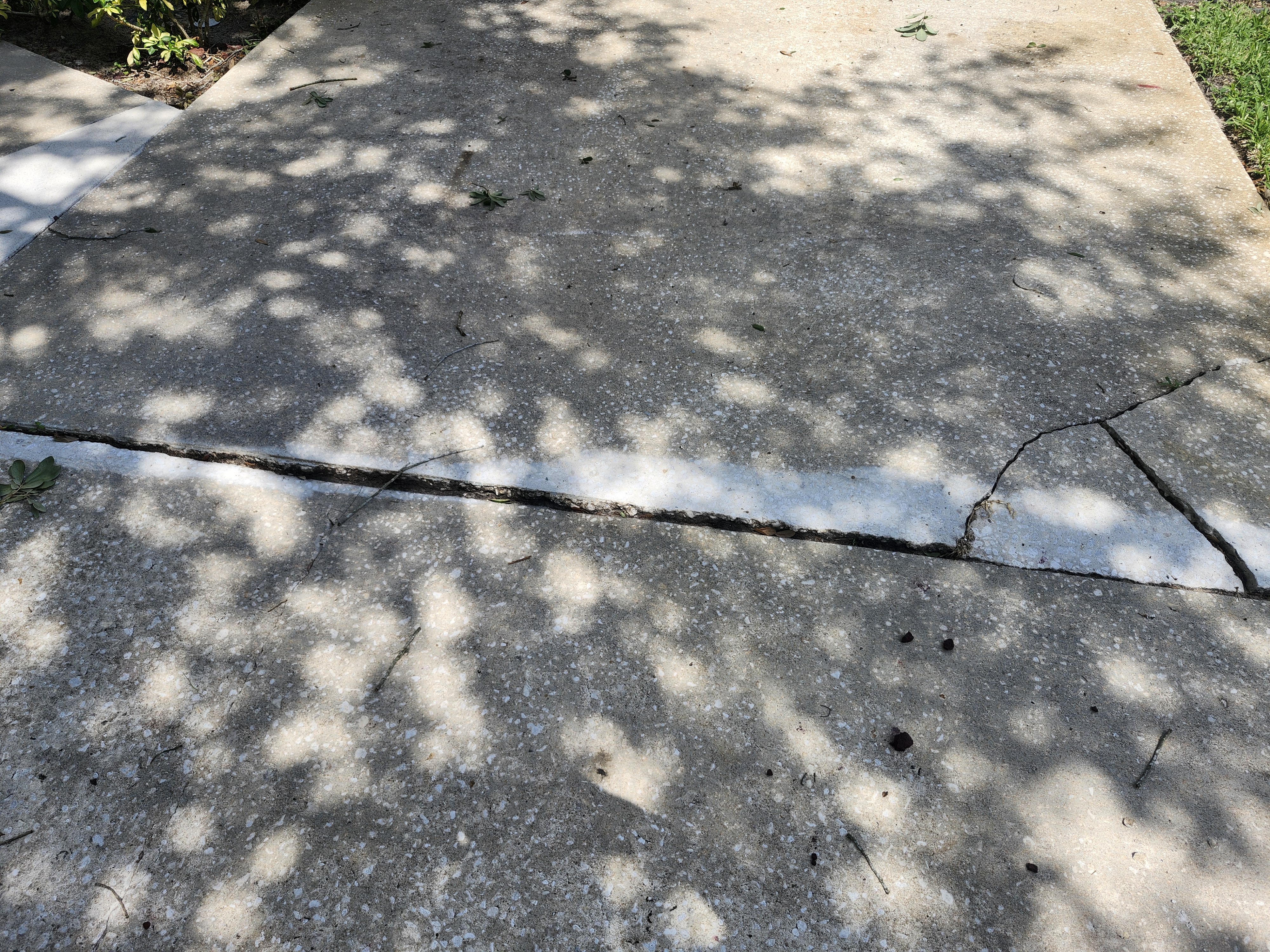
Each hazard takes minutes, not hours. The crew works down the marked list one location at a time, and the measured offset at each joint from the survey tells them exactly how much material comes off. That is why the pre-visit measurement matters. It turns grinding day into execution, not exploration.
A typical grinding visit follows the same sequence regardless of property size, only the number of repeats changes.
The crew reviews the marked hazard list against the property, confirming each location before equipment comes off the truck.
The grinder and dust control equipment are positioned at the first marked joint. No broader staging area is needed beyond the immediate work zone.
The crew grinds the raised edge down to meet the neighboring panel, using the survey's recorded offset as the target, then checks the result by hand and eye for a flush, even transition.
Dust and residue are cleared from the joint and surrounding walk before the crew moves on, so each finished hazard is left walkable immediately.
Steps 2 through 4 repeat at every marked hazard. On a small property this may be a handful of repeats; on a larger network it can be dozens.
Once the list is complete, the crew does a final pass to confirm every marked hazard was addressed, and flags anything encountered on site that was not on the original list for the CAM's attention.
There is no cure time with grinding, because nothing is poured. A ground joint is walkable the moment the crew moves to the next one. Residents pass an active work area with a short detour of a few feet, not a closed route for a week.
For communities where a closed path is a real hardship, near a pool, a mail kiosk, or a route residents with mobility aids depend on, this is often the deciding factor. The safety case for fixing trip edges quickly is laid out in our trip hazard safety overview. Grinding is the version of that fix that does not trade one accessibility problem for another while the work happens.
Because each hazard takes minutes and needs no cure window, a full property visit is measured in hours. A community with a handful of marked hazards is typically done within a single morning. A larger network with dozens of hazards may take a full day or stretch to a second visit, but the unit of planning is still the hour, not the week.
Compare that with replacement, where each panel involves saw-cutting, removal, forming, a pour, and days of cure time before the section reopens. Both have their place. They just belong on different lines of the estimate, with different calendars attached.
A freshly ground joint reads lighter than the weathered concrete around it, because grinding exposes clean material. That contrast is normal and it fades as the surface weathers in. What you should see is a smooth, flush transition with no lip to catch a shoe, a clean work area, and no leftover slurry or dust film on the surrounding walk.
One honest caveat: grinding fixes the trip edge, not the reason the panel moved. If roots or water are actively lifting a slab, the joint can move again over time. Standing water near walks is worth checking with our one hour drainage test, and a panel that keeps failing after repair belongs in the same conversation as why concrete patches fail. A good vendor points that root cause out during the survey instead of quietly booking your next repair.
Walk the completed work before signing off. At each ground joint, check for the following:
The core method stays the same everywhere, but the visit looks slightly different depending on what kind of walkway network a community has.
Hazards here are usually spread along a longer stretch of sidewalk fronting individual homes. The crew works down the street in order, and the main coordination point is making sure any car parked directly over a marked hazard has been moved before the crew arrives at that address.
Courtyard walkways tend to concentrate hazards near high-traffic points: building entrances, mailbox clusters, and paths to shared amenities. Because these areas see heavier daily foot traffic, scheduling the visit for a lower-traffic part of the day can reduce the number of residents navigating around active work at once.
A trip hazard on a pool deck or clubhouse walkway often gets prioritized ahead of others on the marked list, since these areas see concentrated barefoot traffic. Dust control matters even more here, since a pool deck sits close to water and lounge furniture that residents do not want covered in residue.
Grinding also applies to raised joints in parking areas, not just pedestrian sidewalks. Here the main coordination point shifts from foot traffic to vehicle traffic, making sure the crew has a clear, temporarily marked work zone that drivers can see and avoid.
Grinding rarely happens as a one-time event. Most communities fold it into a recurring inspection rhythm alongside other exterior maintenance, since a fresh set of hazards can appear between visits as tree roots grow, irrigation shifts soil, or a prior repair starts to move again.
Communities that pair an annual sidewalk survey with a grinding visit soon after tend to keep their hazard count low and predictable each year, since problems get addressed while they are still small enough to grind rather than growing into replacement candidates. A community that lets several years pass between surveys typically finds a larger share of replacement work waiting when they finally do walk the property, since more panels have had time to cross from a grind-eligible offset into a replacement-eligible one.
Building grinding into the same seasonal rhythm as other property walks, rather than treating it as a standalone emergency response to a resident complaint, is the difference between a small annual maintenance line and an occasional larger repair project.
Keep a short record for each grinding cycle, separate from the original survey record:
This record closes the loop on the original survey documentation and gives the next board an accurate history of what has already been addressed on the property.
No. Residents can pass an active work area with a short detour of a few feet. There is no need to close the walkway.
Typically minutes per hazard, since the crew is cutting down a pre-measured offset rather than diagnosing the problem on the spot.
Yes, initially. Freshly exposed concrete is lighter than weathered concrete around it. This fades as the surface weathers in over time and is not a sign of a problem.
A good crew flags it for the CAM rather than grinding it on the spot without review, since an unsurveyed hazard has not been measured or classified as a grind or replace candidate yet.
Grinding does produce mechanical noise at each location, but it is limited to the minutes the crew is actively working that specific spot, not a continuous all-day disturbance across the property.
Yes, since there is no lengthy closure involved. Coordinating start times around a community's highest foot-traffic windows is usually a simple scheduling conversation, not a scope change.
A confirmation of which hazards from the original list were completed, and a separate list of any hazard identified as needing replacement instead, so nothing falls through the cracks between the two categories of work.
New hazards can appear between survey cycles, especially after heavy rain or a root growth spurt. A quick spot-check of that one location does not require waiting for the next full property survey, and a good vendor will assess a single reported hazard on its own without a full re-walk of the network.
We offer a complimentary on-site inspection and a specific, hazard-by-hazard proposal for sidewalk grinding across Central Florida, including Orlando, Longwood, Sanford, Maitland, Casselberry, Winter Park, and Lake Mary, as part of our concrete and asphalt repair services. Call the office at (407) 744-9122 or message us to schedule a walk-through of your property.
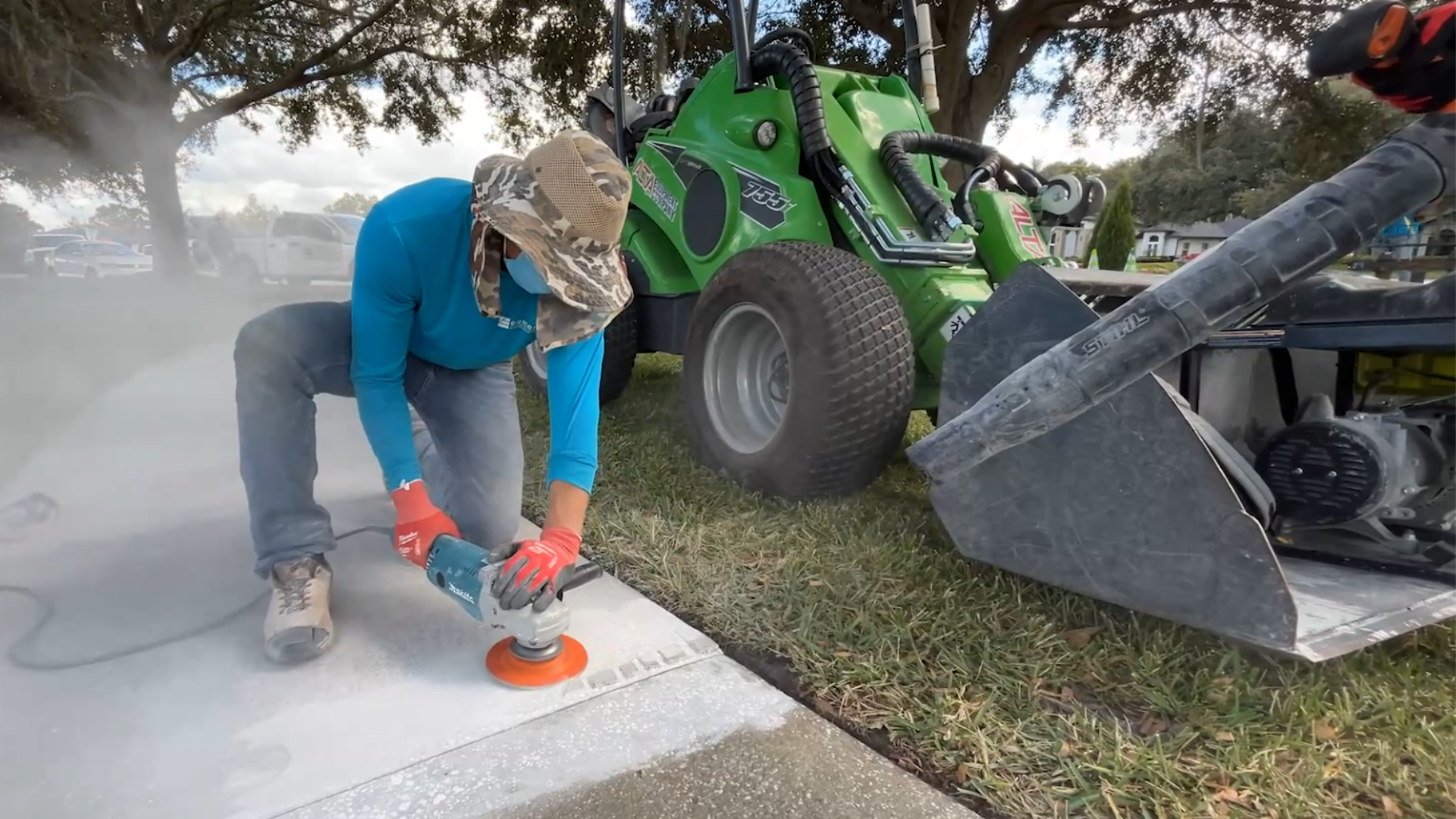
We measure every sidewalk hazard before quoting. Grind what is sound, replace what is not. Request a complimentary on-site inspection today.
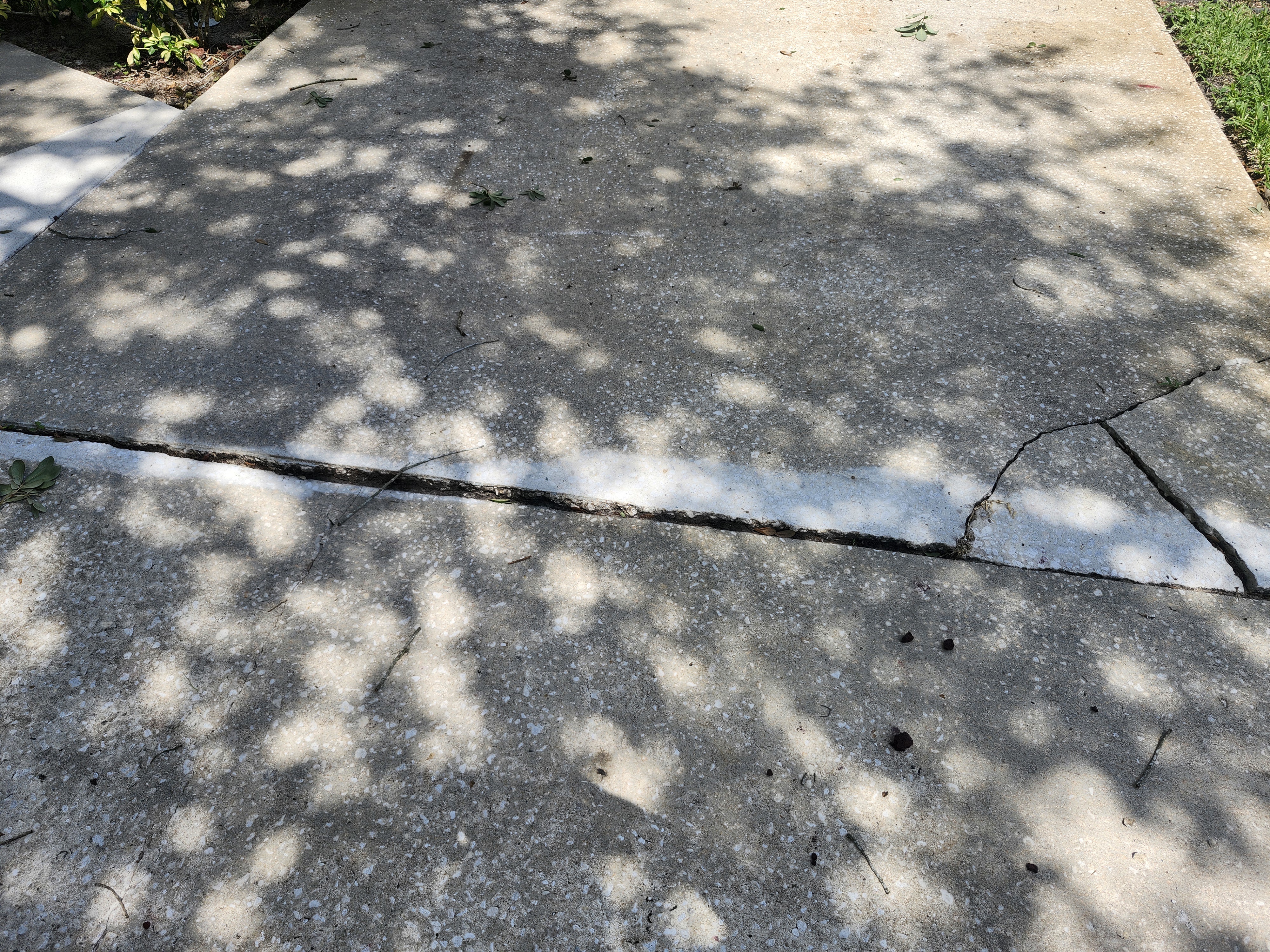
A concrete patch that skips the rusting steel underneath fails within a season. Request a complimentary on-site inspection today.
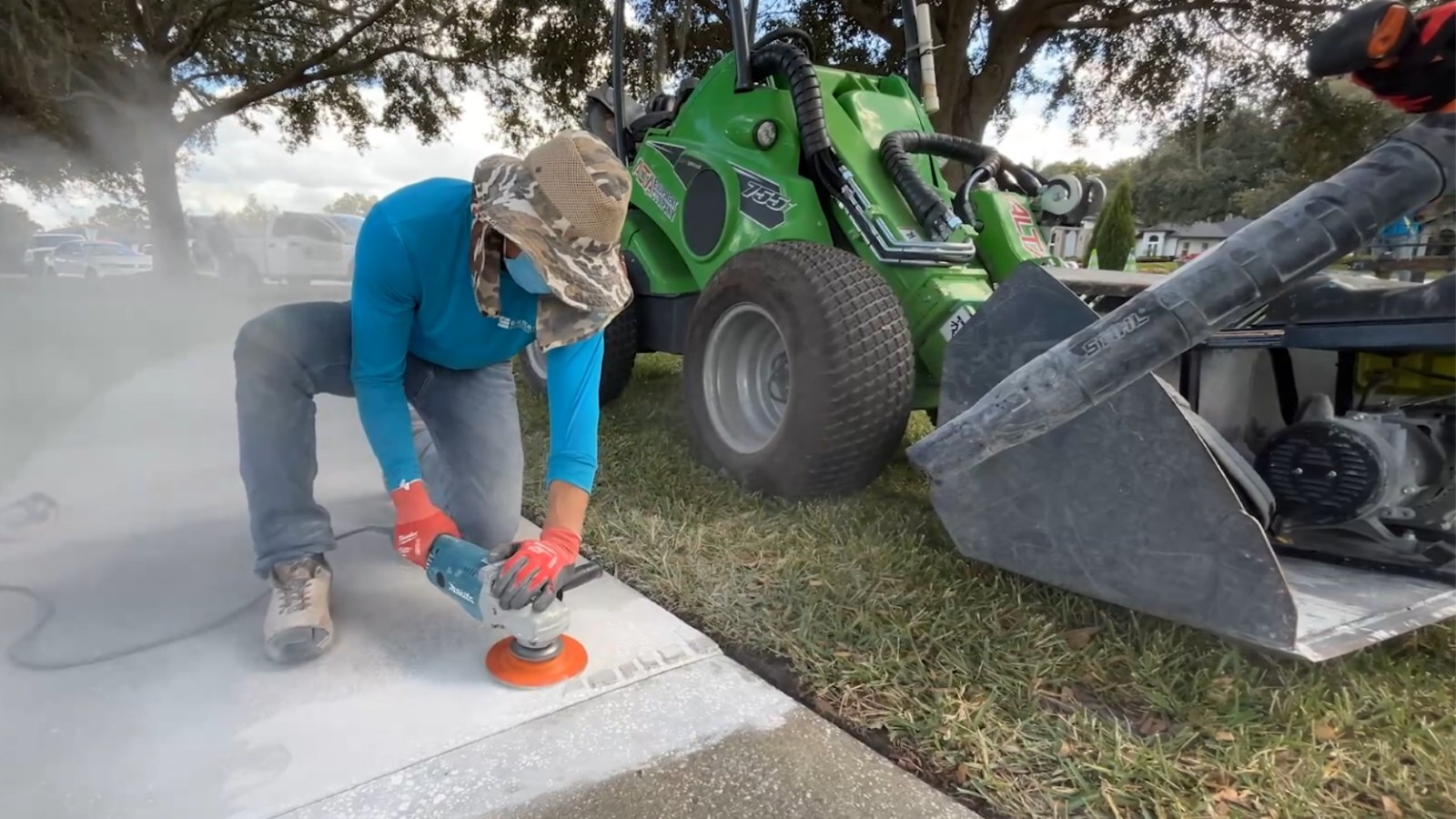
Concrete on a Florida HOA or condo property is not just sidewalks. See every element that can fail, what to look for, and how often to inspect it.