Sidewalk Grinding Day: What Actually Happens on Your Property
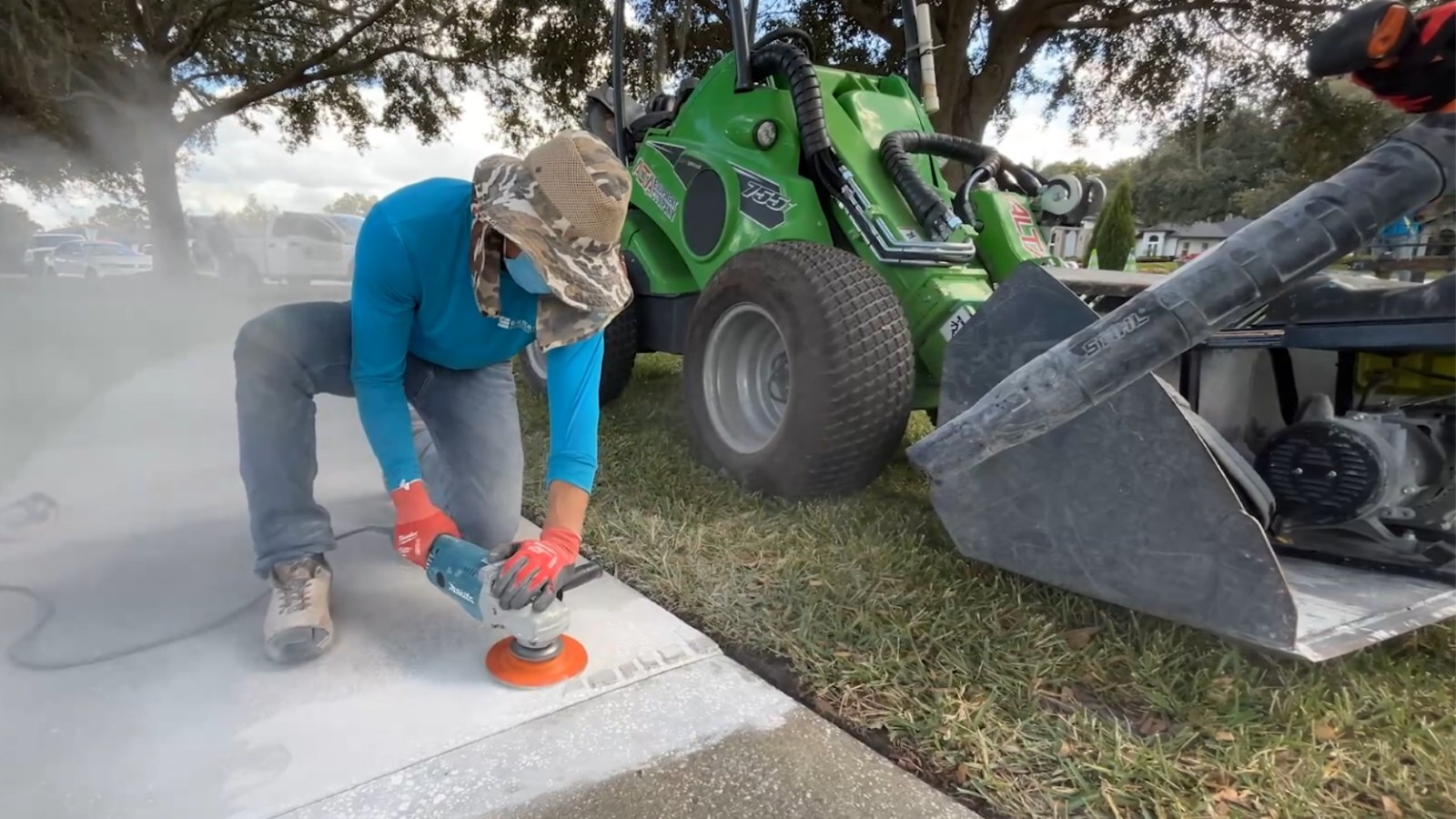
What a sidewalk grinding visit actually looks like: access, dust control, repairs in place, hours not days. Request a complimentary on-site...
10 min read
A board gets one sidewalk quote that says grind everything. A second quote says replace everything. Both answers should make a CAM nervous, because neither one is usually true.
The honest answer sits in the middle. Most raised sidewalk joints can be ground flush for a fraction of replacement cost. A smaller share of panels are damaged enough that grinding will not hold, and those need to come out. The only way to know which is which is to walk the property and measure every hazard before anyone talks price. For the safety case behind why this matters at all, see our trip hazard safety overview.
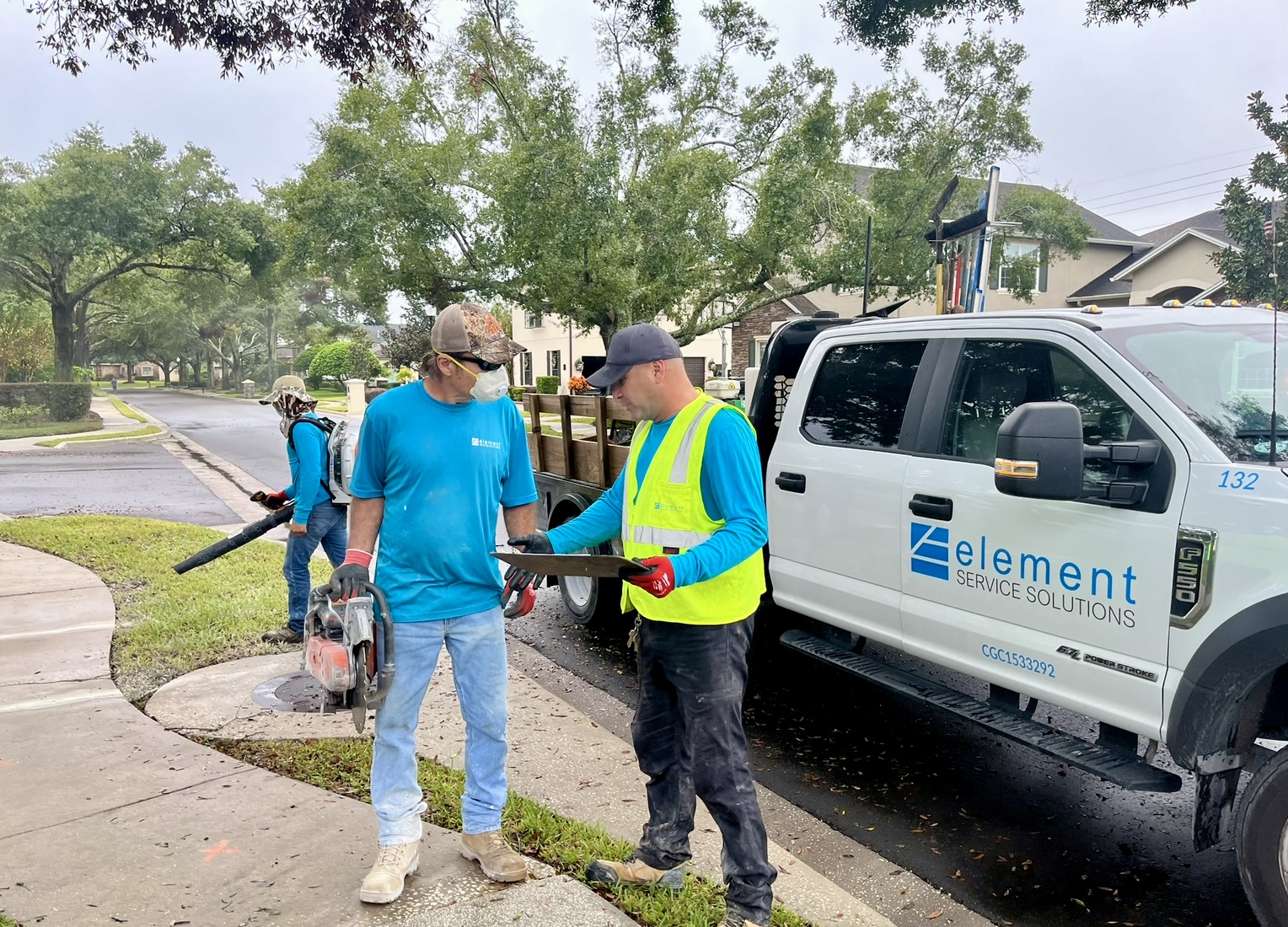
At one Central Florida condo community, our crew walked the entire sidewalk network and found 48 separate trip hazards. Each one got marked with an orange X and measured with a tape at the joint, not eyeballed from a golf cart.
That distinction matters. A visual guess tells a board there is a problem. A measured survey tells a board exactly how many panels are affected, how severe each one is, and what portion of the scope belongs to grinding versus replacement.
A proper survey moves down the sidewalk in order, panel by panel, and applies the same short sequence of checks at every marked hazard. Knowing the sequence helps a board tell a real inspection from a drive-by guess.
The surveyor walks the full network, not just the stretch that generated a complaint, and marks every raised joint or visible crack with spray paint or a flag as it is found. Hazards get logged in the order they appear so nothing gets skipped on a second pass.
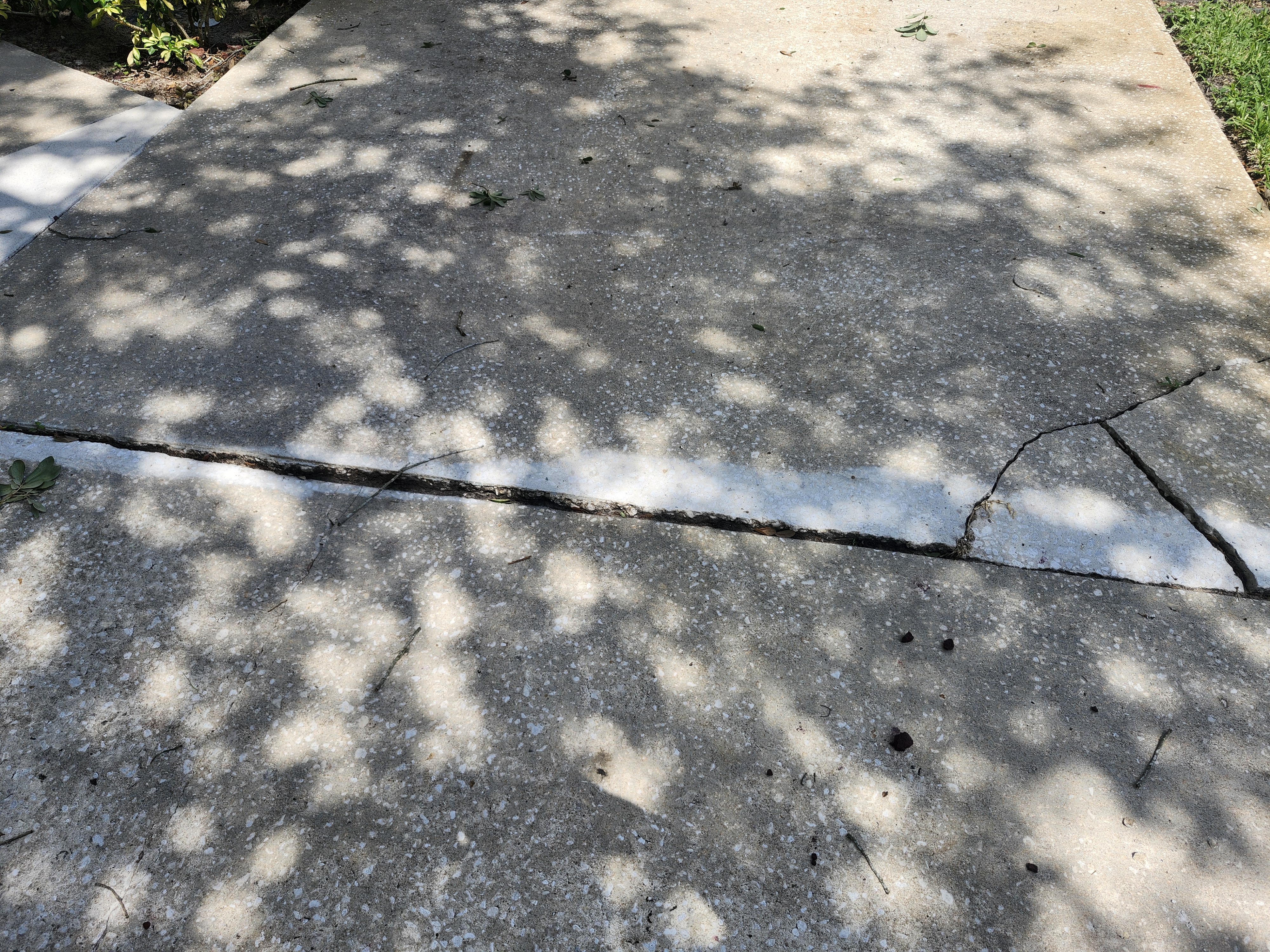
At each marked spot, a tape measure goes against the vertical face of the joint to record the exact height differential in a straight line, not a guess based on how the light hits the edge. This number is the single biggest factor in the grind-or-replace call.
The surveyor looks across the full face of the panel, not just the raised edge, for cracking that runs through the slab rather than sitting on the surface. A panel can have a minor offset at the joint and still fail this check if the body of the slab itself is compromised.
A sound panel sits flat, with the offset isolated to one edge where it meets its neighbor. A panel that has settled unevenly across its own surface, tilting or dishing rather than staying flat, does not have a consistent plane left to grind toward.
The surveyor stands on the panel edge and rocks their weight to feel for movement. A solid panel does not flex. A panel that rocks or springs back is telling the surveyor that whatever is underneath it, base material, root mass, or standing water, is no longer providing even support.
Before moving to the next hazard, the surveyor notes anything nearby that could explain the movement: a tree root crossing under the walk, a downspout draining onto the joint, or a low spot that holds water after rain. That note matters later, because a repair that ignores the cause tends to fail again in the same spot.
Six steps, applied consistently at every hazard, is what turns a walk-through into a survey a board can actually rely on for a scope decision.
Use this table on your next walk-through, panel by panel. It is the same test our crews apply on every site.
| Condition observed | Grind | Replace |
|---|---|---|
| Vertical offset at the joint | Under 1 inch | 1 inch or more |
| Panel surface | Sound, no cracking through the slab | Cracked all the way through |
| Panel plane | Flat, offset only at one edge | Settled unevenly across its own surface |
| Base beneath the slab | Stable, no washout | Undermined by water or root movement |
| Feel underfoot | Solid, no rocking | Rocks or flexes when stepped on |
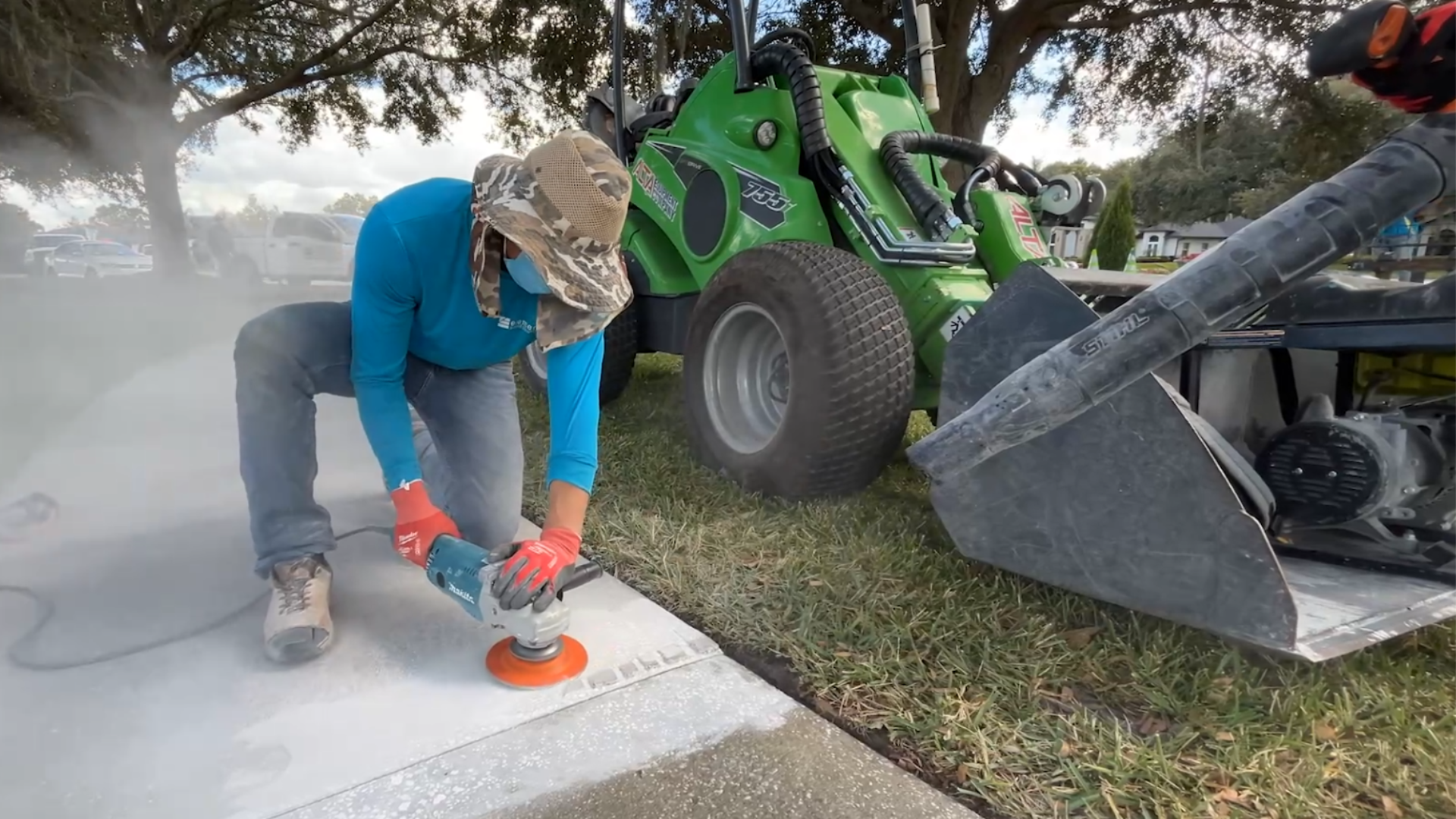
Grinding is the right fix when two conditions are both true. First, the concrete panel itself is sound, no cracking through the slab, no rocking underfoot. Second, the vertical offset at the joint is under about an inch.
Under those conditions, a grinder can cut the raised edge down to meet its neighbor and leave a safe, walkable transition. There is no demolition, no closed sidewalk section, and no concrete truck blocking a resident's driveway for a day. Grinding a single hazard is typically a same-visit repair measured in minutes per panel, not a multi-day project.
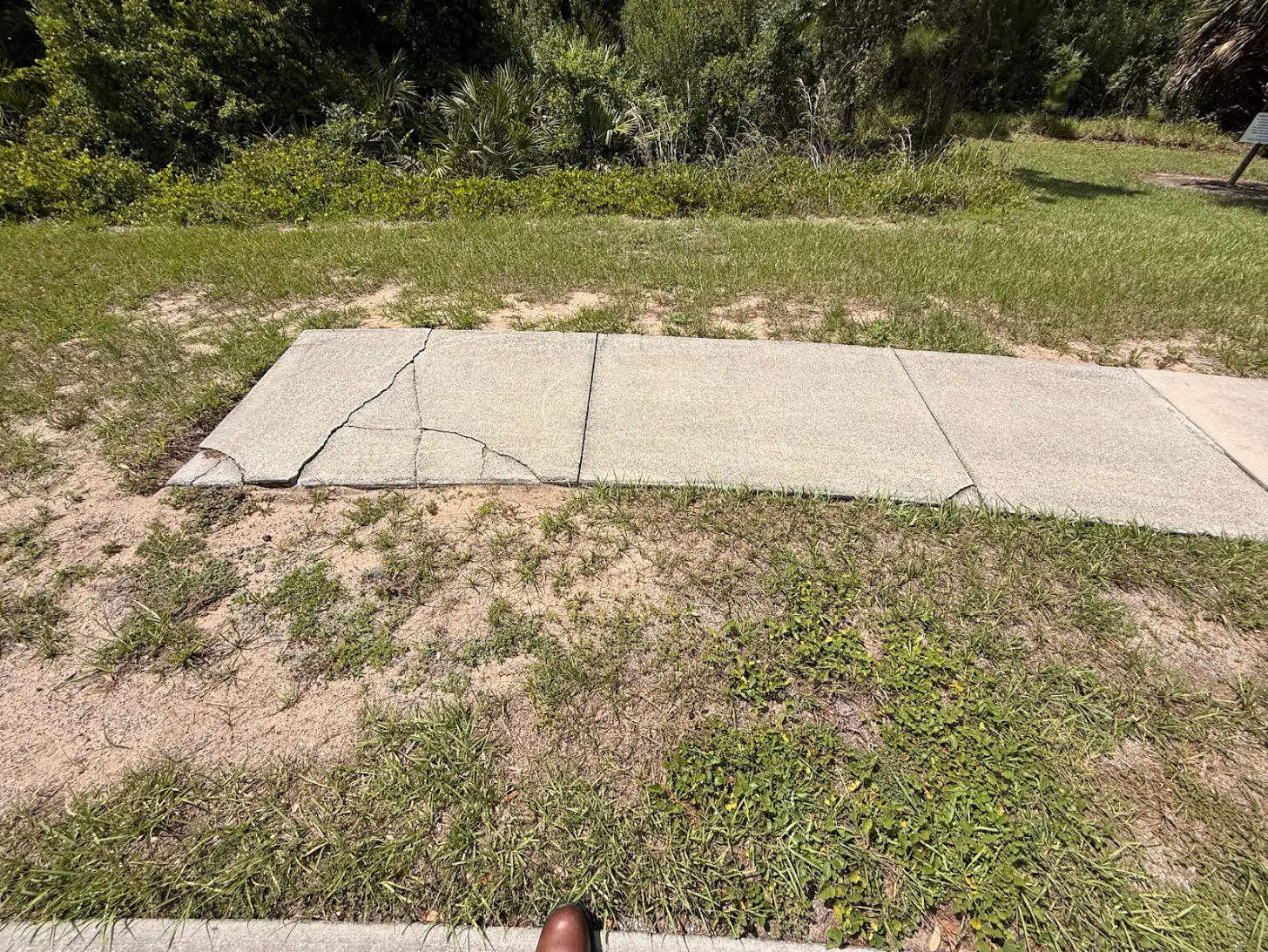
Grinding is the wrong fix, every time, under three conditions. If the panel is cracked all the way through rather than just lifted at the joint, grinding cannot restore its structural integrity. If the panel has settled unevenly across its own surface rather than just at one edge, there is no flat plane left to grind toward. If the panel is undermined, meaning the base beneath it has washed out or been disturbed by roots, grinding treats a symptom while the real problem keeps moving underneath.
Any one of those three conditions means the panel is a replacement candidate, not a grind candidate. A panel-by-panel survey is the only way to separate the two categories consistently, whether the property has 48 hazards or 4. Replacement work involves saw-cutting, removal, and a concrete cure period, so plan on days rather than hours for each replaced panel, plus cure time before the section reopens to foot traffic.
On most properties we inspect, the real answer is a mix. Most of the marked hazards grind. A smaller number get replaced. That mix is exactly what a proper proposal should show, broken out panel by panel, not folded into one lump "concrete repair" line.
A contractor who proposes full replacement across an entire sidewalk network without walking the property and separating the two categories is worth a second opinion. So is a contractor who insists everything can be ground when a panel is visibly cracked through or rocking.
A trip hazard is not only a liability question. A raised joint of even a modest height can stop a walker, cane, or wheelchair cold, turning a routine sidewalk into an obstacle for the residents who depend on it most. Treating smooth, flush walkways as a baseline maintenance goal, not an occasional project, is simply good practice for any community serving residents of all mobility levels.
That framing changes how a board should read a survey. A hazard that is technically minor by measurement can still matter a great deal if it sits on the direct path between a building entrance and a mailbox, a pool gate, or an accessible parking space. Ask your surveyor to flag hazards on high-traffic accessible routes separately, even if the offset itself is on the smaller side, so those locations get scheduled first.
Every sidewalk quote is shaped by a handful of factors that have nothing to do with the contractor's markup. Reading a quote against these drivers helps a board tell a fair price from a padded one.
Sidewalk grinding can happen almost any time of year in Central Florida since it does not involve a concrete pour or cure window. Replacement work is easiest to schedule in the drier months, roughly October through May, when a freshly poured panel is not sitting under daily afternoon thunderstorms before it has cured. Scheduling replacement ahead of the summer rainy season also keeps a fenced-off, curing panel out of the highest-foot-traffic months for pools and playgrounds.
A simple month-by-month way to think about it: use the October to May window to knock out any panels already flagged for replacement, since drier weather means fewer schedule slips. Use the June through September rainy season for grinding work instead, since it needs no cure time and is far less exposed to weather delays. If your board also tracks hurricane season prep, the National Hurricane Center's seasonal outlook (nhc.noaa.gov) is a useful general reference for when to front-load exterior projects before storm season peaks.
A sidewalk survey is only as useful as the record a board keeps of it. Build a simple file for each survey cycle that includes the following, and keep it on hand for the next board meeting, the next contractor bid, and the next insurance conversation.
This record does two things. It gives the next contractor a starting point instead of a blank property, and it gives the board a paper trail showing the hazard was identified and addressed in a reasonable timeframe, which matters if a resident ever raises a concern about a spot that was already on the list.
Before your next property walk, print this list and bring it along:
Good answers are specific: a stated offset threshold, a description of how base condition gets checked, and a clear cure-time window. A vague answer, like "we will take care of it" without a process description, is a sign the vendor has not walked many sidewalks with a tape measure in hand. Any contractor working in Florida should also carry an active state license; you can confirm that directly through the Florida Department of Business and Professional Regulation's license search at myfloridalicense.com before signing anything.
A properly ground joint on a stable panel should hold for years. If the same spot lifts again quickly, that usually points to an active cause underneath, like roots or drainage, that needs its own fix.
Yes, within limits. Each grind removes a small amount of material, so a panel that has already been ground once may have less margin before an offset returns. A surveyor can tell you how much material remains.
No. Grinding removes surface material at the raised edge only. It does not affect the structural thickness of the panel in any meaningful way when performed correctly.
If a panel that should have been replaced is ground instead, the underlying issue, whether cracking through the slab or an undermined base, continues and the hazard is likely to return. That is why the survey step matters more than the grinding step itself.
Generally no. Grinding uses compact equipment brought directly to each hazard and does not require the staging area or vehicle access that a concrete truck and replacement work need.
An annual walk-through is a reasonable baseline for most communities, with an additional check after any major storm season or known drainage event that could have shifted a panel.
Not automatically, but a crack that runs all the way through the slab, rather than sitting on the surface, is one of the three conditions that rules out grinding. A surveyor should confirm the depth of the crack before making the call.
Before your community signs off on a sidewalk repair scope, ask for the hazard-by-hazard survey, not just a total. Ask which panels are grind candidates and which are replacement candidates, and ask why. A vendor who can answer both questions has actually walked your sidewalks.
We offer a complimentary on-site inspection and a clear, specific proposal for sidewalk trip hazard repair across Central Florida, including Orlando, Longwood, Sanford, Maitland, Casselberry, Winter Park, and Lake Mary, as part of our broader concrete and asphalt repair services. Call the office at (407) 744-9122 or message us to schedule a walk-through of your property.
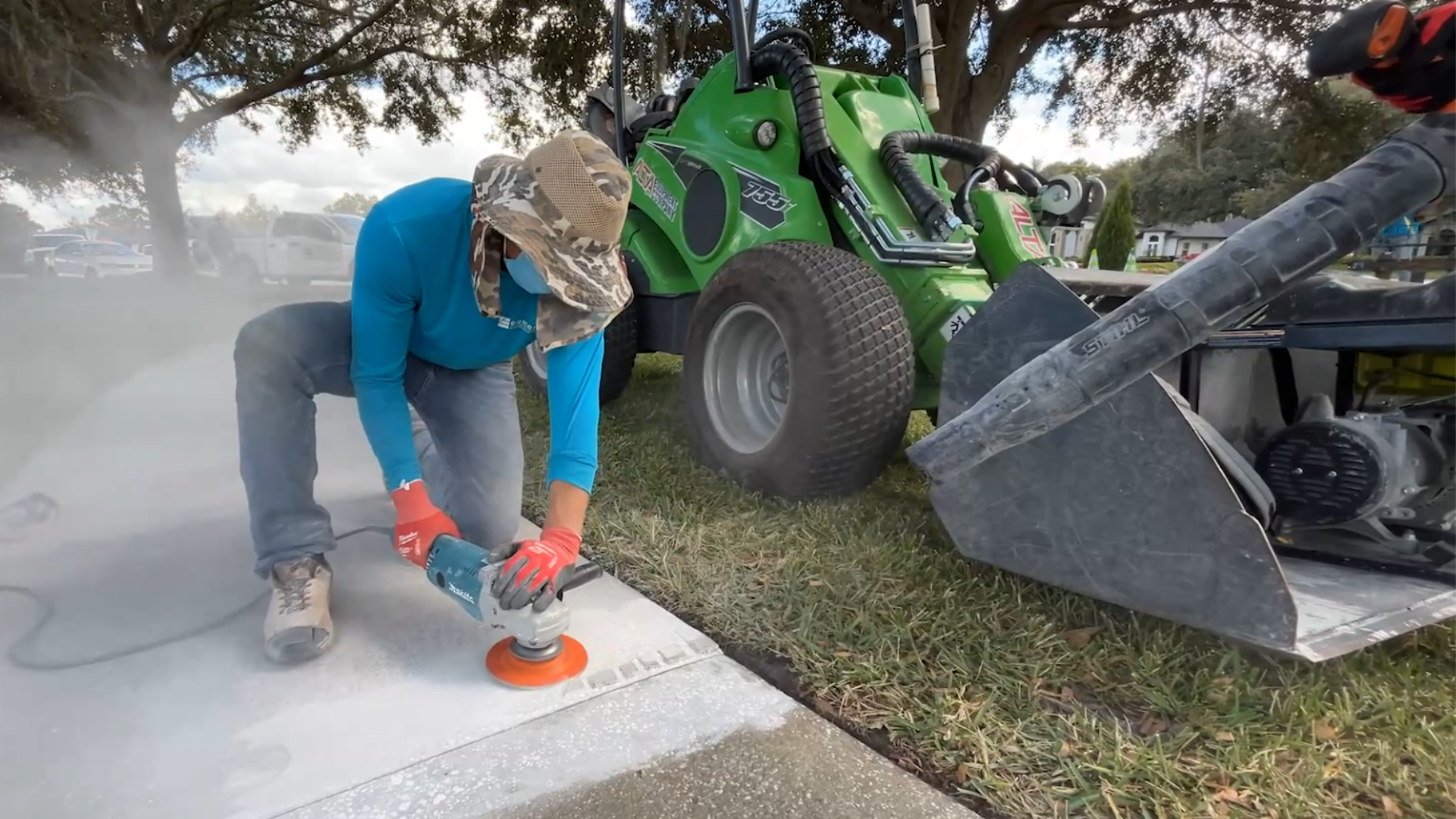
What a sidewalk grinding visit actually looks like: access, dust control, repairs in place, hours not days. Request a complimentary on-site...
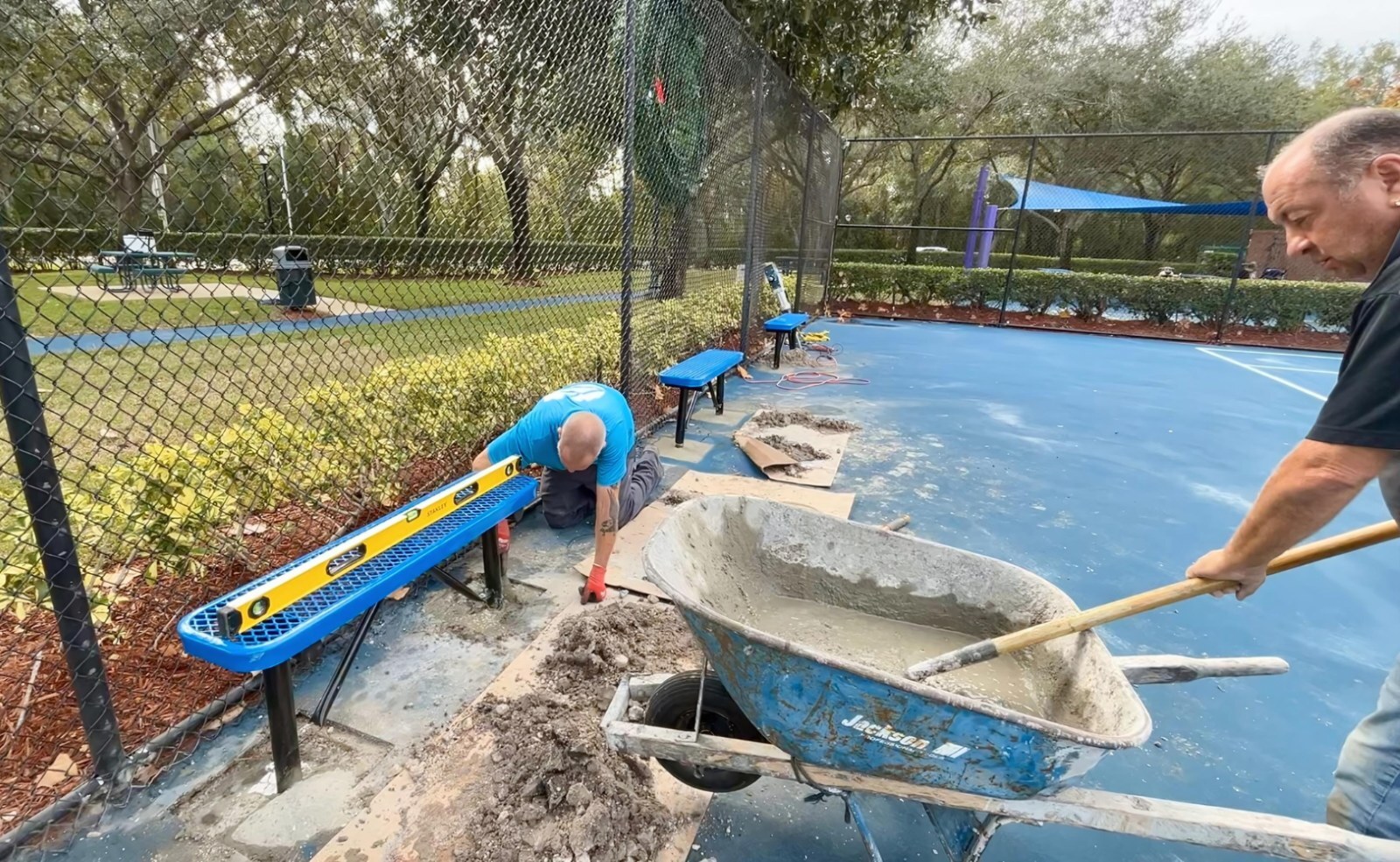
A milestone inspection report tells your board what needs structural work. It does not price drainage, flatwork, stucco, or landscaping. Here's the...
Concrete on a Florida HOA or condo property is not just sidewalks. See every element that can fail, what to look for, and how often to inspect it.