10 min read
How Long Does a Community Repaint Actually Take?
Gavin Sederopoulos : September 16, 2026
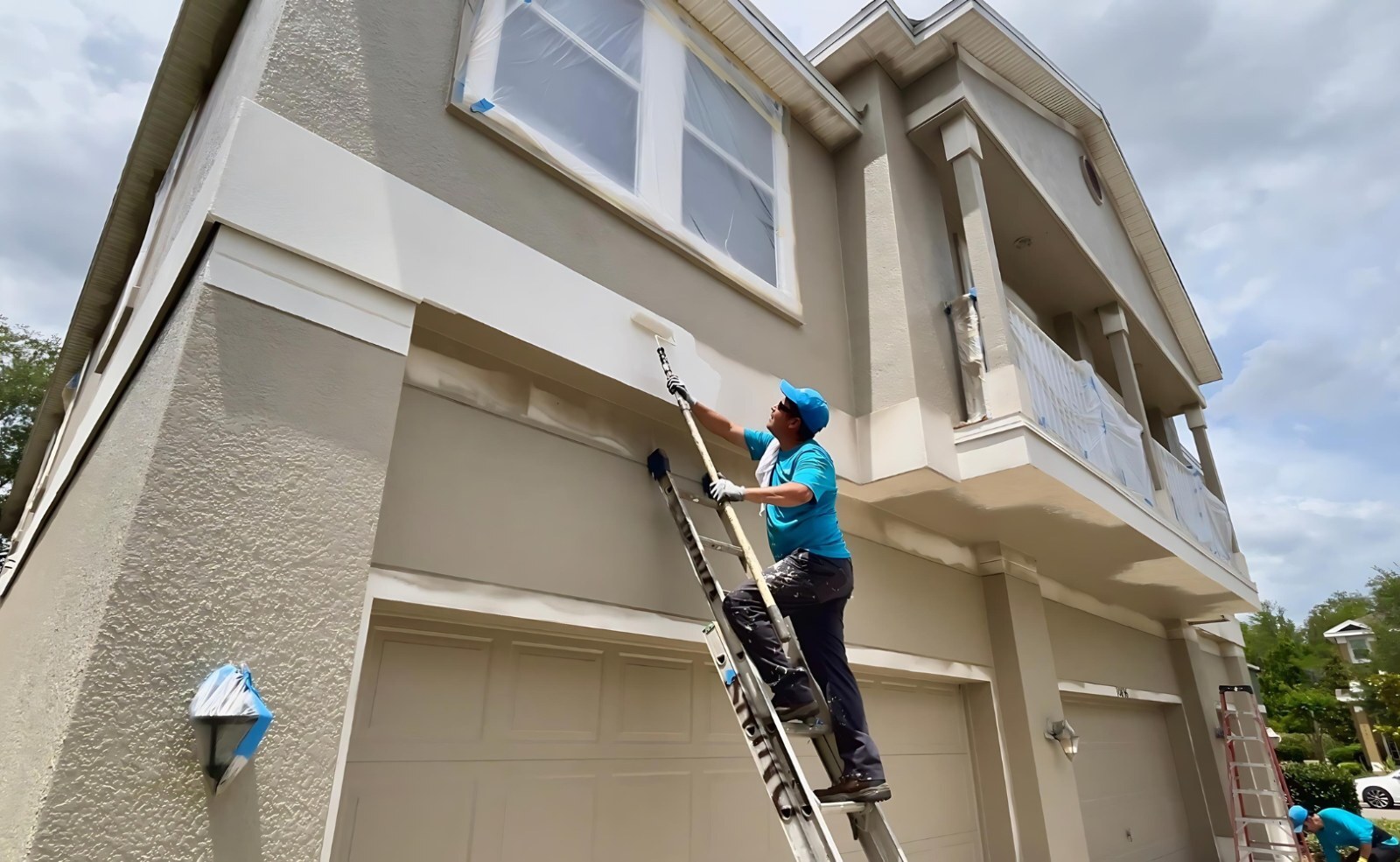
The board asks the obvious question first. How long is this going to take. And the honest answer is never a single number, because a repaint is not one job. It is six or seven jobs stacked in order, each one waiting on the last, and a handful of them waiting on the weather too.
That is not a dodge. It is the actual shape of the project, and once a board can see the shape, the schedule stops feeling like a mystery and starts feeling like something they can plan a resident notice around.
What actually sets the schedule
Four things move the calendar more than anything else. Get a straight answer on these four before you circulate a start date to residents.
- Color approval turnaround. If the board wants to see samples on the actual building before signing off, that step alone can add a week or more, and it happens before anything else can start.
- Weather. Prep and paint both need a dry building and a dry forecast window. A wet stretch does not just cost the days it rains. It resets the drying clock every time it interrupts a coat.
- How much repair work is hiding under the old paint. A building with sound stucco and tight caulk lines moves through prep fast. A building with cracked corners, failed caulk joints, and soft wood trim adds days of repair before a brush ever gets loaded.
- Building count and access. A single clubhouse is one sequence. A twelve-building community is that same sequence run in phases, building by building, which is why a full-community repaint is measured in weeks per phase, not one end-to-end date.
None of these are unknowable in advance. A pre-project walk should surface the repair scope and flag the access constraints before the schedule ever reaches the residents.
The phase-by-phase shape of a repaint
Every exterior repaint runs through the same sequence, in the same order, whether it is one building or twelve. What changes with size is how many times the sequence repeats, not the sequence itself.
| Phase | Typical duration | What residents notice |
|---|---|---|
| Survey and color approval | A few days to two weeks | Nothing visible yet. Samples may go up on a wall for board review. |
| Pressure cleaning | One to a few days per building | Noise, water runoff, temporary staining that will be corrected in repair and paint. |
| Repairs and caulking | Several days to a week or more, depending on scope | Ladders and lifts against the building, patched sections that look different from the surrounding wall until painted. |
| Masking and surface protection | Same day as the start of priming | Plastic sheeting and tape around windows, doors, light fixtures, and any items left on porches or lanais. |
| Priming | One to a few days per building | Blotchy, uneven color as bare repairs and problem areas get sealed before the finish coat goes on. |
| Finish coats | A few days to a week per building | The actual color change. Usually the most visible and most photographed phase. |
| Punch list and walk | A few days | Crew returns to touch up missed spots, remove masking, and do a final walk with property management. |
For a single building, that sequence typically runs three to five weeks end to end. For a multi-building community painted in phases, expect each phase to run on roughly that same three-to-five-week rhythm, staggered so the crew moves from one building to the next rather than opening every building at once.
What happens in each phase, and what it asks of residents
Survey and color approval
Before anything touches the building, someone walks the property to confirm the actual repair scope, not just the paint scope. This is also when color decisions get locked. If the board wants sample boards mounted on the real wall in real light before approving, build that time in up front. Approving color after the crew has already mobilized is the single most common cause of a schedule slipping in week one.
Pressure cleaning and dry time
Every surface gets cleaned before anything else happens, because paint applied over dirt, chalk, or mildew fails early regardless of how good the paint itself is. After cleaning, the building needs a dry stretch, typically a day or two of clear weather, before repair work and priming can begin. This is the first point where a rain system can push the whole sequence back, because the crew is not waiting on labor. They are waiting on the wall to be dry enough to hold the next step.
Repairs and caulking
This is the phase that varies the most from building to building, and it is also the phase a board most underestimates. Cracked stucco corners, gaps at trim and window frames, and failed caulk joints all get addressed here, before priming, because paint does not fix a substrate problem. It just shows it more clearly, and faster, once the color goes on. A building that looked fine from the parking lot can still carry a week of repair work once someone is standing on a lift looking at it up close.
Masking and surface protection
Windows, light fixtures, door hardware, and anything permanently mounted to the building gets taped and covered. This is also the point where residents need to have moved anything temporary off their patio, porch, or lanai that sits against the building wall. A grill, a bike, potted plants against the wall, a screen enclosure track that needs clearance. None of it can stay in place once masking starts, and a crew that has to stop and ask a resident to move something loses time that was not built into the schedule.
Priming and finish coats
Primer goes down first to seal repairs and even out the surface so the finish coat reads as one consistent color rather than a patchwork of old and new. The finish coats are the visible transformation, and they are also the most weather-sensitive phase, since a coat interrupted partway through drying can leave lap marks or an uneven sheen that has to be corrected.
Punch list and final walk
The crew returns after the finish coats have had time to set, removes all masking and protection, and does a detail pass for anything that needs a touch-up: a missed edge, an overspray spot, a trim line that needs cleaning up. Property management should walk the building with the crew lead before signing off, not after the equipment is already gone.
How phasing actually works on a multi-building community
A single clubhouse or a standalone commercial building runs the sequence once. A community with a dozen residential buildings does not run it twelve times at once. It runs it once per building, staggered so that only one or two buildings are in active work at any given moment.
There are practical reasons for that beyond keeping the crew focused. Staging equipment, ladders, and material only needs to live at one location at a time instead of spread across the property. Parking restrictions only affect residents near the active building instead of the whole community simultaneously. And if weather pushes one building's finish coats back a few days, it does not automatically cascade into every other building's schedule, because each one is running its own version of the same sequence on its own clock.
The tradeoff is time. A twelve-building community painted at roughly three to five weeks per building, with some overlap as the crew finishes one building and mobilizes on the next, commonly runs a total project window of several months rather than a few weeks. That is not a sign of a slow contractor. It is what phasing costs to keep the disruption manageable for any one resident at a time.
Ask your contractor for the actual phasing order before the project starts, not just a total end date. Knowing which building is first and which is last lets you notify residents building by building instead of trying to explain a single project window that does not describe most owners' actual experience of it.
Scheduling mistakes that quietly add weeks
Most schedule slips on a repaint trace back to one of a small handful of avoidable causes, and almost none of them are weather.
- Color approval happens after mobilization. A board that wants to see samples on the actual wall should ask for that before a start date goes out, not after the crew has already scheduled the first building.
- The repair scope was estimated, not walked. A proposal built from a drive-by look at the building routinely underestimates caulk and stucco repair. That gap surfaces once a lift gets the crew close enough to see it, and it adds days that were never in the original schedule.
- Residents were not told to clear the wall line. A crew that arrives to mask a building and finds grills, furniture, and planters still against the wall either works around them, which slows masking down, or waits for someone to move them, which stalls the whole building.
- No single point of contact for schedule questions. When a delay happens and residents cannot get a straight answer quickly, the board absorbs the frustration that a five-minute update could have prevented.
- The notice went out the week work started. Residents need enough lead time to actually act on the instructions, not just enough time to read them.
Quick glossary for the resident notice and the crew's vocabulary
| Term | What it means |
|---|---|
| Prep | All the work that happens before paint goes on: cleaning, repairs, caulking, masking. |
| Masking | Taping and covering windows, fixtures, and anything not meant to be painted. |
| Primer | The sealing coat applied before the finish color, used to even out repairs and improve adhesion. |
| Lap marks | Visible overlap lines left when a coat dries unevenly, often from starting and stopping in the wrong sequence or interrupted by weather. |
| Punch list | The final list of small touch-up items identified on the closing walk of the project. |
| Weather hold | A pause in work because current or forecast conditions do not allow prep or paint to proceed safely or successfully. |
Notifying residents: what to say and when
A repaint touches residents more than most exterior projects, because it sits right against their unit, their porch, and their parking spot for days at a time. The notice should go out before the crew mobilizes, not once ladders are already up, and it should be specific enough that a resident does not have to call the office to find out what it means for them.
Sample resident notice
Subject: Exterior painting begins the week of [date] on [building or area]
[Community name] will begin exterior painting on [building or area] starting the week of [date]. Work is expected to take approximately [X] weeks for this building, weather permitting.
What this means for you: Please remove any items from your porch, patio, or lanai that are within a few feet of the exterior wall, including grills, plants, and furniture, by [date]. If you park near this building, please plan for temporary parking restrictions during active work hours. Pets should be kept indoors or away from the work area during the day. Screen enclosures and lanai access may be temporarily restricted while masking is in place.
Work typically runs [days/hours]. You do not need to be present during the project. If weather delays the schedule, we will post an updated timeline at [location].
Questions can be directed to [contact name and information].
What a weather delay actually changes
Rain does not just cost the day it falls. Depending on what phase the crew is in when it hits, it can cost more than that single day, and a board that understands why tends to have a much easier time explaining a delay to owners.
| Phase when rain hits | What actually happens |
|---|---|
| Before pressure cleaning | Start date slips. Low impact, easiest to absorb. |
| After pressure cleaning, before repairs | The building needs to dry again before repair work can proceed. Adds the wait, not just the rain day. |
| Mid-repair or mid-caulking | Caulk and patch material need a dry cure window of their own before priming. A rain hit here can add several days, not one. |
| Mid-primer or mid-finish coat | The most costly timing. A coat interrupted before it sets can require re-work of the affected section, not just a resumed schedule. |
| After finish coats, before punch | Usually low impact. The building is largely protected once the finish coat has set. |
The practical takeaway for a board: a single rained-out day rarely means a single day added to the schedule. Ask your contractor which phase the project is in whenever a delay is announced, and ask what the delay actually adds, not just what caused it.
A board's pre-project checklist
- Color samples approved and confirmed in writing before a start date is circulated
- Repair scope confirmed by an on-site walk, not estimated from the parking lot
- Resident notice drafted and scheduled to go out before crew mobilization, not the week of
- Parking and vehicle-move instructions specific to each building phase, not a blanket community notice
- Pet and lanai access guidance included in every notice, not assumed to be obvious
- A named point of contact for resident questions during active work
- A plan for posting schedule updates if weather pushes the timeline
- A final walk scheduled with the crew lead before the project is considered closed out
Reading a proposal closely before you get to this point matters too. A vague scope line on prep or repair work is exactly what turns a five-week project into an eight-week one. See how to read a contractor proposal for what a painting scope line needs to name to hold up once the crew is on site.
A multi-week project also means residents seeing the same faces on the property for weeks at a stretch, which makes it worth knowing in advance whether the crew on your building is employed directly or subcontracted out. See in-house crews vs subcontractors for what that distinction actually changes about who shows up and who you call with a question.
Set your communication expectations before the crew mobilizes, not after a rain delay goes unexplained for a week. A written expectation for response times and schedule updates, attached to the award itself, heads off most of the frustration a delay otherwise causes. See evaluating vendor communication for a template you can attach to any award.
If your board is trying to figure out why the last repaint did not hold up as long as expected, that is a separate question from scheduling, and it usually comes down to what happened, or did not happen, during prep. See why exterior paint fails early in Florida for that mechanism.
Frequently asked questions
How long does painting one building actually take, start to finish?
Most single buildings run three to five weeks from the start of pressure cleaning to the final punch list walk, assuming normal weather and a moderate repair scope. Heavier repair work or a stretch of wet weather can extend that. A light repaint with minimal repairs can run closer to three weeks.
Can residents stay in their units during painting?
Yes. Exterior painting does not require residents to vacate. It does require them to clear items away from the wall, plan around temporary parking restrictions near active work, and keep pets away from the work area during the day.
Why does color approval take so long?
Paint color reads differently on an actual building wall in real light than it does on a small sample chip or a printed rendering. Boards that want to see full-size samples mounted on the building before approving add time up front, but it usually prevents a far more disruptive color change mid-project or after completion.
What happens if it rains during priming or finish coats?
The affected section typically needs to be reworked once conditions allow, not simply resumed where it left off. This is the costliest point in the schedule for a rain delay, which is why contractors watch the forecast closely before starting these phases.
Do all buildings in a community get painted at the same time?
Usually not. Multi-building communities are typically phased, with the crew moving building to building on a staggered schedule. This keeps the crew focused on one building at a time and limits how many residents are affected by active work at once.
How far in advance should residents be notified?
Notify residents before the crew mobilizes on their building, ideally with enough lead time for them to clear porch and patio items and plan around parking changes. A notice posted the same week work begins does not give residents a fair chance to prepare.
If your board is planning a repaint and wants a realistic, building-by-building schedule before you commit to a start date, Element Service Solutions offers a complimentary on-site inspection to walk the actual repair scope and build a timeline you can put in front of your board with confidence.