The One Hour Drainage Test Every Central Florida Board Should Run Before a Storm
Run this one hour drainage test before storm season peaks. We offer a complimentary inspection to sort quick fixes from crew fixes.
9 min read
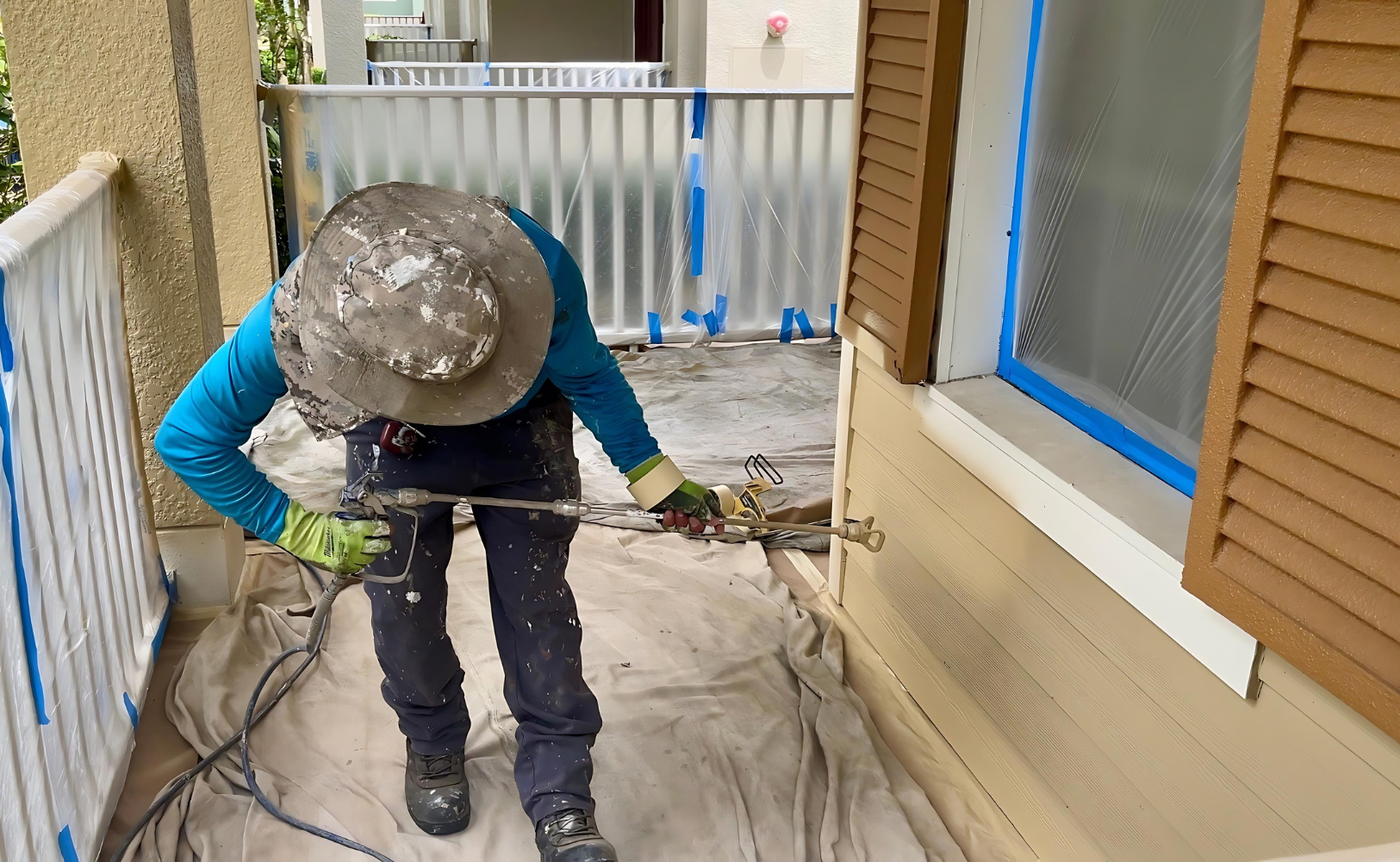
Most early paint failures in Florida trace back to skipped prep, not bad product. Chalky unwashed walls, thin masking, and unsound stucco fail coatings years ahead of schedule.
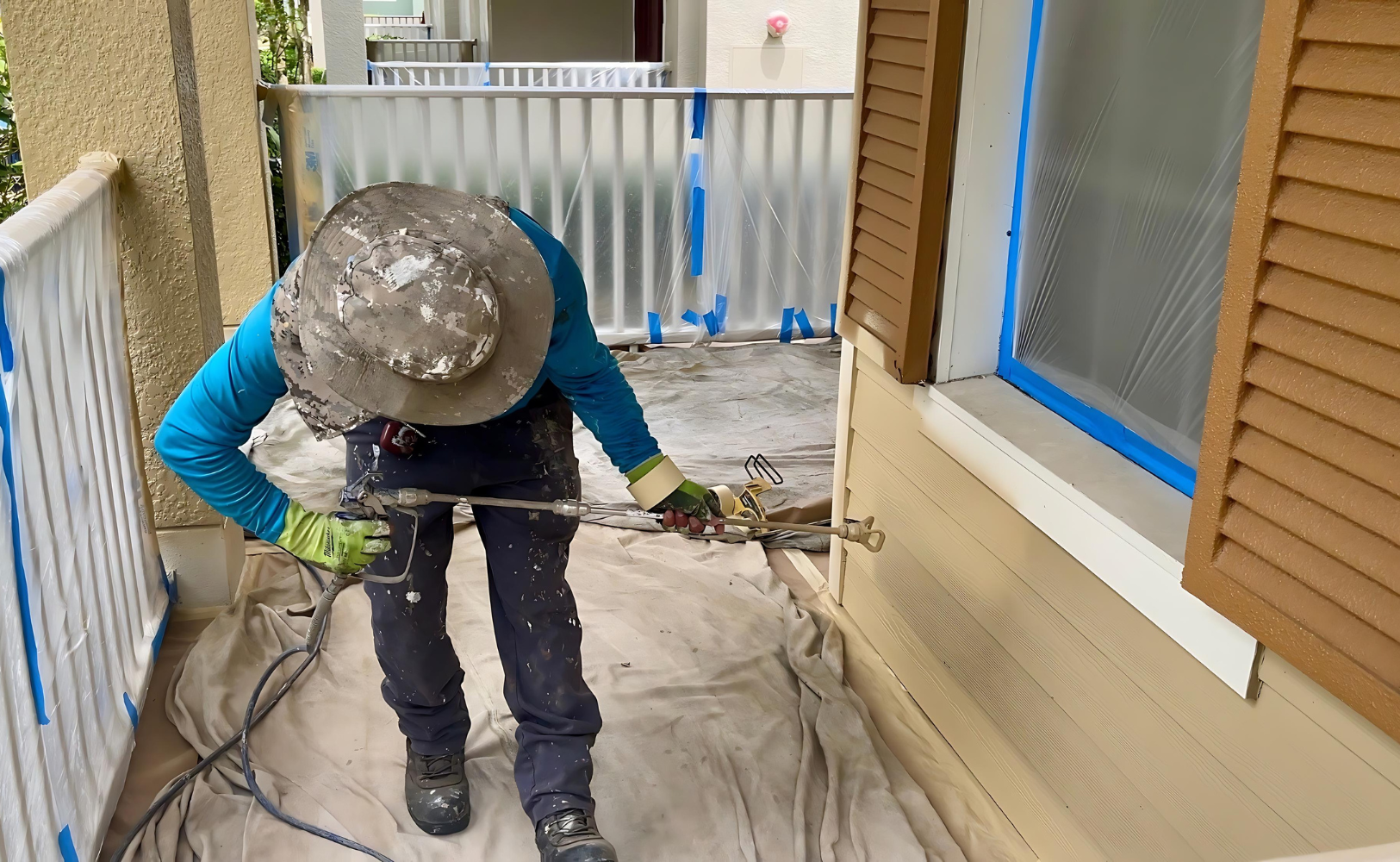
Central Florida asks more of exterior paint than almost anywhere in the country. Intense UV breaks down the binder at the surface, which is why an older painted wall leaves a white powder on your hand when you rub it. Daily summer storms drive water at the walls for months at a stretch. Humidity keeps surfaces damp long after the rain stops.
Good paint is engineered for all of that. What it is not engineered to survive is being applied over a surface that was never made ready. When a community's paint job fails in year three or four instead of lasting into the next decade, the cause is almost always underneath the coating, put there on the first day of the job.
Nearly every early paint failure in this climate traces back to one or more of three physical forces acting on the coating. Understanding them helps a board read a failing wall correctly instead of assuming it just needs a fresh coat.
UV breakdown. Florida gets some of the most intense year-round sun exposure in the country. UV radiation attacks the polymer binder that holds a paint film together, breaking it down at the surface first. That breakdown is what produces chalking, discussed in detail below, and it happens faster on south- and west-facing walls that see the most direct afternoon sun.
Moisture drive. Water does not just sit on a Florida wall, it gets driven into it. Wind-blown rain during a storm pushes moisture into any gap, crack, or porous patch in the coating. Once inside, that moisture has nowhere to go during humid weather, so it pushes back outward from the inside, which is what causes bubbling and blistering even on a wall that looks intact from a distance.
Thermal cycling. A wall that goes from cool overnight temperatures to intense midday heat, day after day, expands and contracts continuously. Coatings with poor flexibility crack along these stress lines over time, and cracks are exactly where the moisture drive above gets its opening.
That white powder on your hand is chalking, the residue of the old coating breaking down. Paint sprayed over it never touches the wall. It bonds to a layer of loose powder, and the powder lets go. The result is peeling and flaking that starts in a couple of years, usually on the sunniest elevations first.
The fix is simple and non-negotiable. Painted stucco gets soft washed before painting, so the new coat bonds to a clean, sound surface instead of a chalky one. Washing also strips the mildew and organic film that Florida walls grow, which cause their own adhesion failures. If the method question matters to your board, our guide to soft washing versus pressure washing explains why low pressure is the right call on painted stucco. Blasting a wall at high pressure can drive water behind the stucco and damage the very surface you are about to coat. Washing is part of our exterior cleaning services for exactly this reason: done right, it is step one of the paint job.
Look at a professional crew mid-job and count everything that is not being painted. Windows sheeted in plastic. Railings wrapped. Fixtures taped off. Walkways covered. Masking is slow, unglamorous work, and it is one of the clearest tells separating a professional operation from a crew racing to the spray gun.
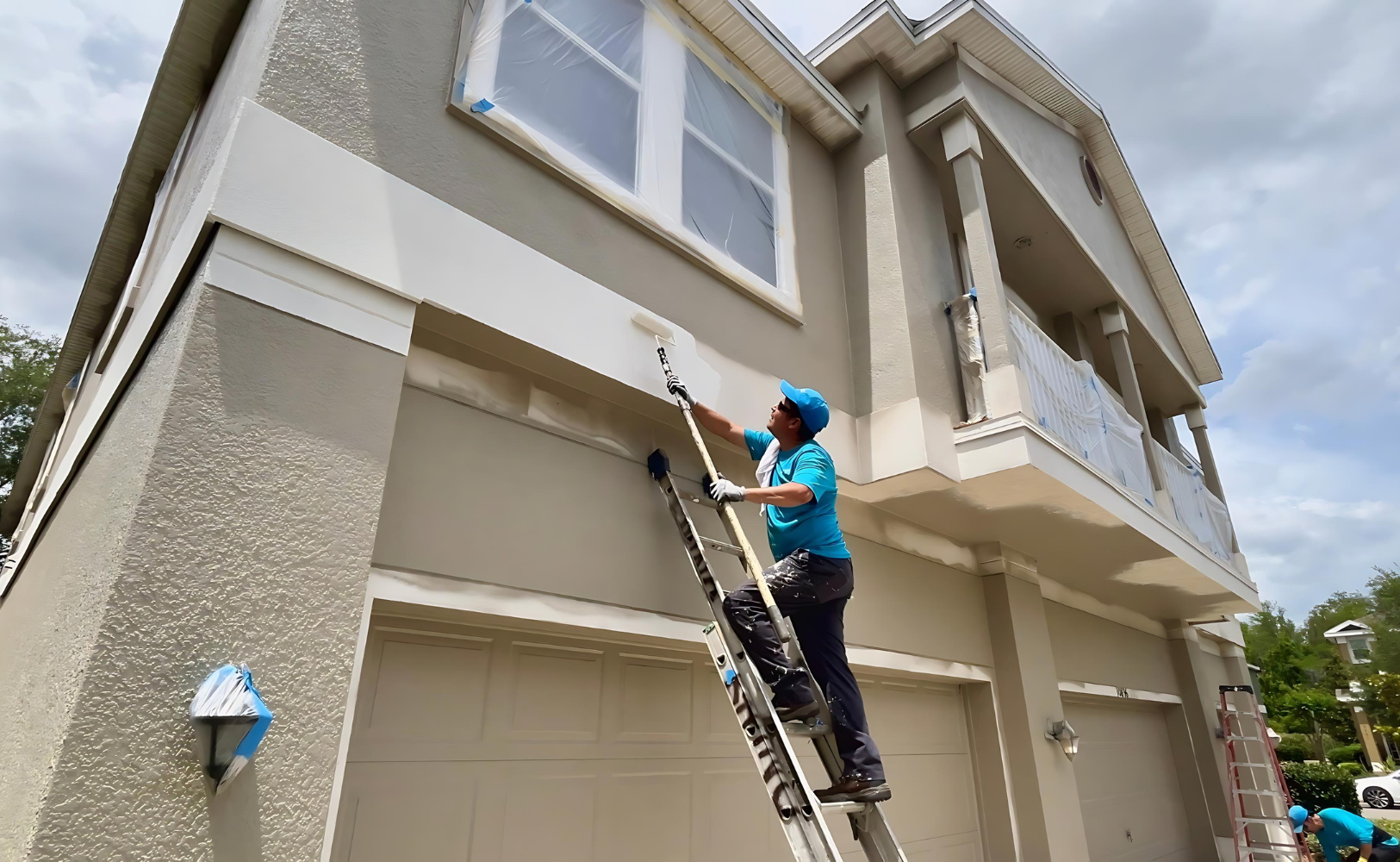
Skipped masking fails a job two ways. The obvious way is overspray, a fog of paint on windows, screens, light fixtures, and parked cars that turns into weeks of complaints and touch-up visits. The quieter way is edges. Crisp, sealed edge lines shed water. Sloppy edges leave gaps where the coating stops short, and every gap is a place for Florida rain to get behind the new paint and start lifting it. Protecting adjacent surfaces is not a courtesy line in a scope. It is coating performance.
Paint is a coating, not a repair. Sprayed over cracked, hollow, or delaminating stucco, it briefly hides the problem and then reports it back, as cracking that telegraphs straight through the new coat, bubbling where trapped moisture pushes outward, and sheets of paint pulling loose with failed stucco still attached.
Sound substrates only. That means the walls get inspected before painting, and cracks and failed patches get repaired and cured before the first coat goes on. A painting scope with no repair line on a thirty-year-old building deserves a hard question, because those walls almost always need something. Corner cracking in particular has its own story to tell about a building; our guide to stucco corner cracks and movement covers when a crack is cosmetic and when it is a symptom.
Some paint failures are set up after the crew leaves. Sprinkler heads aimed at a freshly painted wall soak the same patch of stucco twice a day, every day. Hard water spotting and constant saturation will defeat a coating locally, leaving a stained, peeling band at sprinkler height while the rest of the wall looks fine.
Walk your irrigation zones after any repaint and turn heads away from the buildings. Our checklist for essential irrigation system checks takes an hour and protects a six-figure paint investment.
A correct paint job follows a fixed order. Skipping a step, or doing steps out of order, is where most early failures actually get built in, well before the first coat of color goes on.
Boards do not need to know brand names to ask an informed question about what is actually being applied. Three general categories cover most community exterior work.
| Coating category | General characteristics | Typically used on |
|---|---|---|
| Acrylic exterior paint | Flexible, breathable, standard choice for most repaints | Stucco, siding, trim, general building exteriors |
| Elastomeric coating | Thicker film, bridges small hairline cracks, more rigid application requirements | Stucco with a history of hairline cracking, where bridging is a design goal |
| Masonry or block-specific coating | Formulated for high-alkalinity surfaces like concrete block | CBS block walls, retaining walls, unpainted masonry needing first-time coating |
The category matters less than whether it is matched to the actual substrate and applied at the manufacturer's specified film thickness and coat count. An elastomeric coating applied too thin loses the crack-bridging property it was chosen for in the first place.
| Surface | Prep required before paint | Common shortcut that causes early failure |
|---|---|---|
| Painted stucco | Soft wash, crack repair, cure time, prime patched areas | Painting over chalking or a freshly patched, uncured area |
| Painted wood trim | Wash, scrape loose paint, sand edges, spot prime bare wood | Painting over peeling edges instead of scraping back to sound wood |
| Metal railings | Wash, remove rust, spot prime with a rust-inhibitive primer | Painting directly over surface rust, which bleeds back through within a season |
| Concrete block (CBS), unpainted | Wash, verify full cure if new construction, use a masonry-appropriate primer | Using a standard acrylic primer not suited to high-alkalinity block |
| Prior peeling or delaminated paint | Scrape or pressure-remove loose material back to sound substrate before repainting | Painting directly over the peeling area, which telegraphs through almost immediately |
There is no single fixed interval that applies to every building, since sun exposure, wall orientation, prior prep quality, and coating type all change the timeline. What boards can plan around instead is a set of exposure factors that shorten or lengthen a coating's realistic service life.
Rather than budgeting off a single number, a board is better served tracking these factors per elevation and using them to prioritize which side of the building gets attention first.
A painting bid is not just a number. Each line should describe a specific piece of the sequence above, and a bid missing a line is a bid that plans to skip that step. None of the guidance below involves comparing prices, only comparing what each line actually promises to do.
When you compare painting bids, the price line tells you the least. Ask every bidder the same five questions and compare the answers:
A bid that is meaningfully cheaper than the others usually got there by shortening this list. The prep steps are where the hours live, so prep is what a low bid quietly deletes. The same logic applies across every trade, which is why we keep a standing list of questions to ask any contractor and a guide to how Florida boards vet contractors before signing anything.
How long should exterior paint last in Florida? Service life varies by exposure, prep quality, and coating type, but a coating applied over properly prepped, sound stucco generally outlasts the same coating applied over chalking or unrepaired cracks by several years.
Is chalking a sign the wall needs painting? Chalking means the old coating is breaking down and the wall needs washing before repainting. It is not itself a structural problem, but painting directly over it without washing causes early peeling.
Do all cracked stucco walls need repair before painting? Any crack, hollow area, or delaminated patch should be repaired and cured before painting. A painting bid with no repair line on an older building is worth questioning directly.
Does one coat of paint ever make sense? Most exterior specifications call for two coats for full film thickness and even coverage. A single-coat job is thinner than the product is designed to perform at long term.
Why does my building's paint fail near the sprinklers first? Constant direct water contact defeats a coating locally well before the rest of the wall shows wear. Redirecting irrigation heads away from the building is a simple, low-effort fix.
What is the difference between a material warranty and an adhesion warranty? A material warranty covers defects in the paint itself. An adhesion warranty covers peeling or bubbling caused by how the paint was applied, which is the failure mode this article mostly describes.
Should elastomeric coating always be used on cracked stucco? Elastomeric coatings are one option for bridging hairline cracks, but they still require sound, properly repaired substrate underneath. They are not a substitute for repairing structural or larger cracks first.
If your community is planning a repaint, or an existing paint job is failing early and you want to know why, we offer a complimentary on-site inspection and a clear, specific proposal for community painting across Central Florida, including Orlando, Longwood, Sanford, Maitland, Casselberry, Winter Park, and Lake Mary. Call the office at (407) 744-9122 or message us to schedule a walk-through of your property.
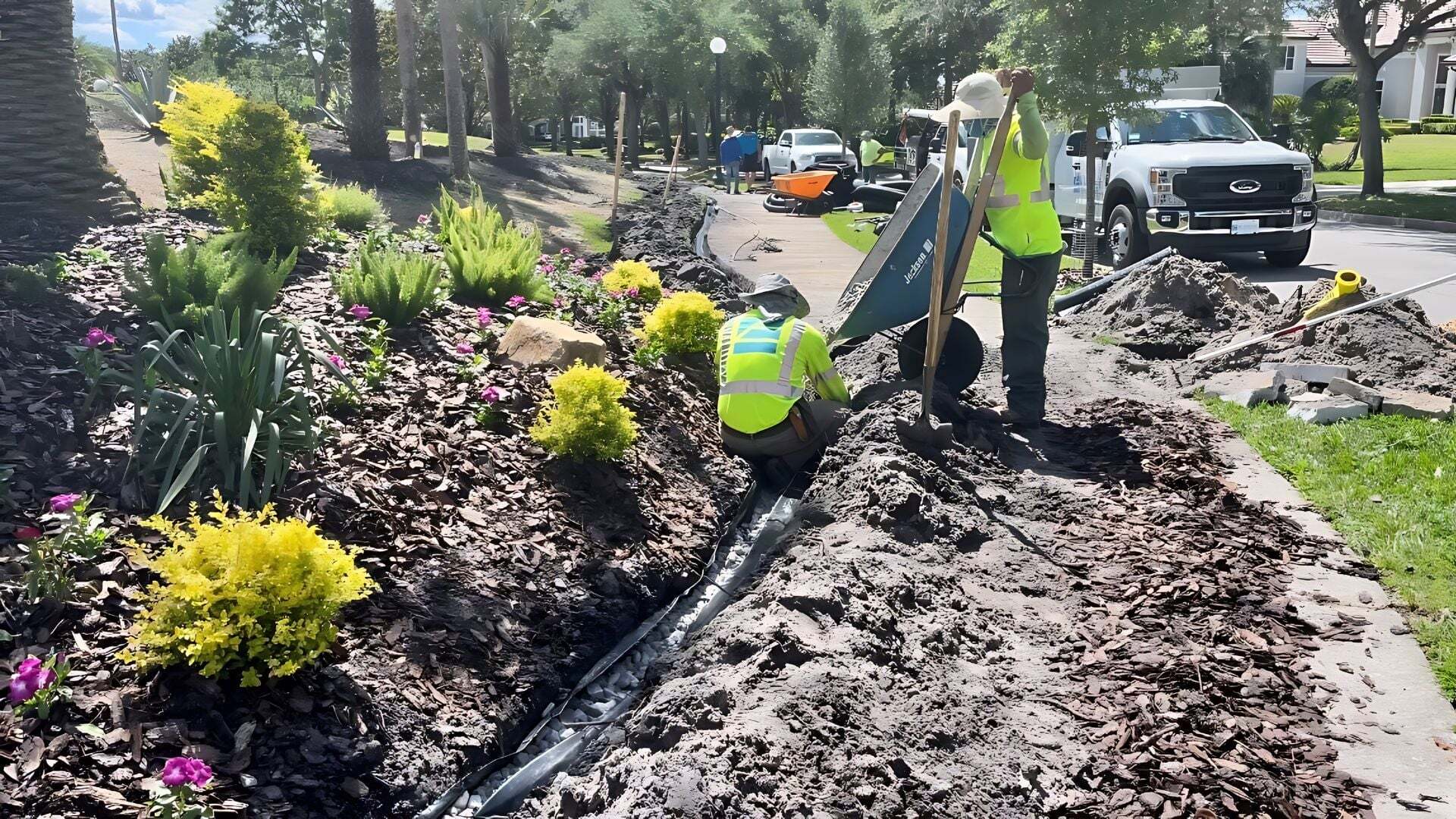
Run this one hour drainage test before storm season peaks. We offer a complimentary inspection to sort quick fixes from crew fixes.
.png)
Discover the importance of fun and safe playgrounds in enhancing community enjoyment.
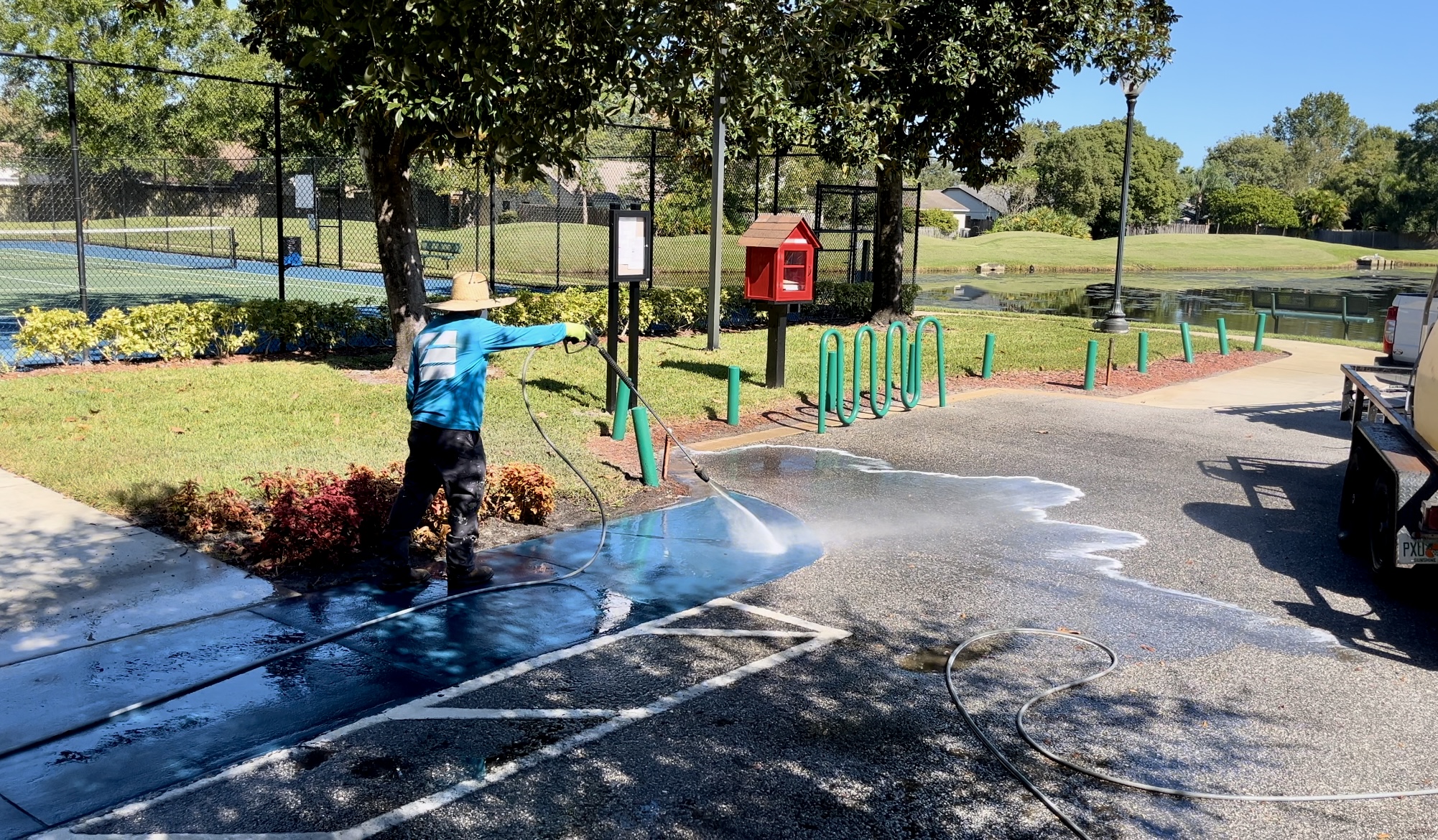
Soft washing kills algae at the root. Pressure strips coatings and leaves it alive. Request a complimentary inspection for your Florida community.