1 min read
How to Read a Contractor Proposal Line by Line
Two proposals land on the board's table for the same fence replacement. One runs four pages with a scope section, a materials list, and a page of...
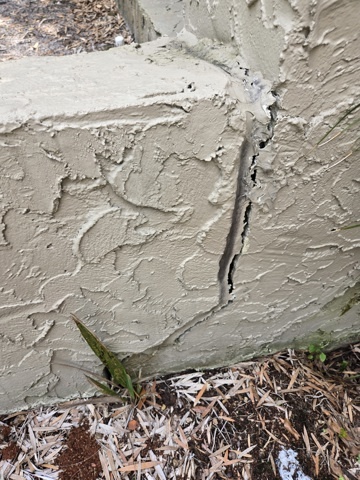
A vertical crack running down a stucco corner is a movement story, not a sign of impact damage. Corners concentrate stress in a way flat wall sections do not, so they are usually the first place stucco lets go.
Boards often see a crack at a building corner and assume something hit it or that the stucco itself is defective. In most cases the real cause is underneath the surface, and understanding it changes how the repair should be done.
Not every stucco crack means the same thing or calls for the same fix. Use this table to sort a crack into one of three categories before deciding on a repair approach.
| Crack type | What it looks like | What it usually means |
|---|---|---|
| Hairline | Thin as a pencil line, often only visible up close or in raking light | Surface shrinkage or minor thermal movement; a moisture pathway to watch, not urgent on its own |
| Movement crack | Runs straight down from a corner, joint, or edge; consistent width along its length | Building settling or thermal cycling concentrating stress at a fixed point |
| Structural crack | Wider than a pencil line, may step or offset, sometimes accompanied by visible bulging or a gap you can fit a coin into | Movement significant enough to warrant a closer look at what is happening behind the stucco, not just the finish coat |
Most corner cracks a board encounters fall into the first two categories. The third category is less common but is the one worth having assessed promptly rather than simply resealed, since it suggests movement beyond normal thermal cycling.
A building's frame and slab expand and contract with temperature, and settle slightly over years as the structure ages. On a flat wall section, that movement spreads across a wide area and rarely shows up as a single crack. At a corner, two wall planes meet at a fixed point, so the same movement has nowhere to spread. It concentrates right at the joint.
That is why the crack pattern at a corner looks different from cracking on an open wall. It runs straight down from the top edge, following the line where the stress has nowhere else to go.
Two forces drive most corner cracking: gradual building settling and daily thermal cycling as the structure heats up and cools down. Neither is unusual for a building's age or a defect specific to one property. Both are simply part of how a structure behaves over time.
When either kind of movement reaches the stucco at a corner, the rigid coating cannot flex with it. The stucco cracks at the point of least resistance, which is almost always the corner itself rather than the middle of a flat run.
Boards and CAMs can apply a simple test during a routine property walk, before calling in a contractor. The test has three parts, and running all three on a suspicious crack gives a much more reliable read than eyeballing it from a few feet away.
Follow the crack back to where it starts. A movement crack begins at a fixed point, a corner, a joint, or an edge, and runs in a straight line away from it. An impact crack radiates outward from a clear point of contact, like a chip, dent, or scuff mark, often in multiple directions from that one spot rather than a single straight line.
A movement crack tends to hold a fairly consistent width along its run. An impact crack is often widest at the point of contact and tapers as it radiates outward, since the force driving it is concentrated at that one spot rather than distributed along a stress line.
Impact damage almost always leaves a visible mark at its origin point, a chip, a dent, a scrape, or a stain from whatever made contact. A movement crack has no such mark. If the crack simply starts at a corner with nothing unusual at that point, movement is the far more likely explanation.
Running all three checks takes a couple of minutes per crack and gives a board a documented reason for classifying it one way or the other, rather than a guess that a vendor can talk them out of later.
Once a crack is classified, the repair approach follows from the taxonomy above. This is where a vendor's proposed fix should match what was actually found.
A patch of rigid compound smeared over any of these three, without matching the material to the crack type, is the fastest way to end up redoing the same repair within a year.
A fresh coat of paint over a corner crack looks like a fix for a season. But the movement underneath has not stopped just because the surface looks clean. The crack telegraphs back through the new paint, usually within the same cycle of seasonal temperature swings that caused it in the first place.
This is the same lesson that applies across exterior repair generally: treating the visible symptom without addressing what is happening underneath buys time, not a fix. It is worth comparing this directly to why concrete patches fail for the same reason, since both involve painting or patching over an active cause instead of addressing it.
A repair that lasts follows a specific sequence rather than a quick patch over the crack line.
Sealant cure time is typically a matter of a day or so before topcoat, far shorter than a concrete cure window, but skipping it entirely still undermines the repair. A rebuild of a structural crack area takes longer, since it may involve more of the wall assembly than the surface coat alone.
Stucco crack repair can be scheduled across most of the year in Central Florida, but extreme heat and direct sun during application can affect how sealant and topcoat cure. Many crews prefer cooler parts of the day during peak summer months, and steady dry stretches make scheduling easier than weeks with frequent afternoon storms. None of this rules out addressing a crack promptly; it mainly affects which time of day work happens rather than which season.
A vendor who answers with specifics, a stated cure time, a described classification method, has actually inspected stucco cracks before. A vendor who answers only in terms of "repaint" without describing the crack work itself is pricing a paint job, not a stucco repair.
Some cracks are worth monitoring over a season rather than repairing immediately, particularly hairline cracks with no other signs of concern. Use this simple method and log to track whether a crack is stable or actively widening.
Place a strip of painter's tape across the crack at its widest visible point, then cut the tape cleanly along the crack line with a blade so the two halves sit flush against each other. If the crack is actively moving, the tape will visibly split or overlap at that point over time. For a more precise read, a caliper or a printed crack-width comparator card held against the same spot each month gives a repeatable measurement in a fraction of an inch.
A crack that holds a stable width over several months of logging supports a routine repair timeline. A crack that visibly widens between checks is worth escalating for a closer look sooner rather than waiting for the next scheduled repaint cycle.
Not every corner on a building carries equal risk. A few locations see this pattern more often and are worth extra attention on a routine walk.
Corners near the roofline experience the widest daily temperature swing, since they absorb direct sun exposure and radiate heat differently than shaded lower corners. That wider swing means more thermal cycling and, over time, more opportunity for a crack to form.
These are visually harder to spot from ground level since a covered walkway roof can block the sightline. They still see the same settling and thermal forces as any other corner, just with less routine visual monitoring by residents passing underneath.
Where a building's design already includes an expansion joint nearby, the stucco at the adjacent corner can see amplified movement, since the joint is designed to move and the corner absorbs some of that motion transferring through the wall.
Where a single-story section meets a taller section of the same building, the corner where they join can experience different settling rates between the two connected structures, concentrating stress at that transition point.
A property walk that specifically checks these four locations, not just the corners nearest entrances and parking, is more likely to catch movement cracking before it becomes a wider repair.
Rarely. Most corner cracks are gradual movement that can be scheduled into a routine repair or repaint cycle. A crack accompanied by bulging or a wide gap is worth a prompt look, not necessarily an emergency call.
It can be monitored for a period using a simple log, but a hairline crack is still a moisture pathway. Left unaddressed long enough, it can contribute to problems similar to those described in concrete spalling: moisture reaching what is behind the surface.
Some degree of corner cracking is common as buildings age and go through repeated thermal cycles. It is not a sign of a defective original stucco job by itself.
Ask directly whether cracks were individually classified and opened for sealant before the topcoat schedule was set. A proposal that only mentions surface prep and paint, with no crack-specific language, is a signal to ask more questions.
A freshly sealed and repainted section should match the surrounding finish once the topcoat is applied and cured. Any visible texture or color difference should fade once the full repaint cycle is complete.
Monitoring means measuring and photographing the crack on a set schedule using a consistent method, so a change is caught early. Ignoring it means no record exists to show whether it changed at all.
Yes. Corner cracks near a roofline or above a covered walkway are just as likely to occur as ones at eye level, but they are harder to spot from the ground and are easy to miss without a dedicated building walk.
Do not approve a repaint over a corner crack without asking whether the crack itself will be opened, filled with a flexible sealant, and cured before the topcoat goes on. A vendor who proposes painting directly over an unaddressed crack is proposing a repair that will need to be redone.
This matters most on multi-story buildings, where a corner crack near a roofline or a covered walkway is harder to spot from ground level than one at eye height. A property walk that specifically checks every visible corner, not just the ones near entrances, catches cracking earlier and keeps the eventual repair smaller.
Ask any painting vendor whether their scope includes a corner-by-corner inspection before the crew starts prepping walls, or whether they are pricing off a general condition assessment from the ground. The first approach finds movement cracks before they are painted over by accident.
We offer a complimentary on-site inspection and a clear, specific proposal for stucco crack repair and exterior painting across Central Florida, including Orlando, Longwood, Sanford, Maitland, Casselberry, Winter Park, and Lake Mary, as part of our general maintenance services. Message us or call the office at (407) 744-9122 before your next repaint goes out to bid.
1 min read
Two proposals land on the board's table for the same fence replacement. One runs four pages with a scope section, a materials list, and a page of...
1 min read
Ask a board member to list the concrete on their property and most will say sidewalks, maybe the pool deck if they think about it a second longer....
.png)
1 min read
Elevate community engagement through strategic installation of professional bulletin boards