10 min read
Choosing the Right Turf for the Spot That Keeps Failing
Gavin Sederopoulos : September 20, 2026
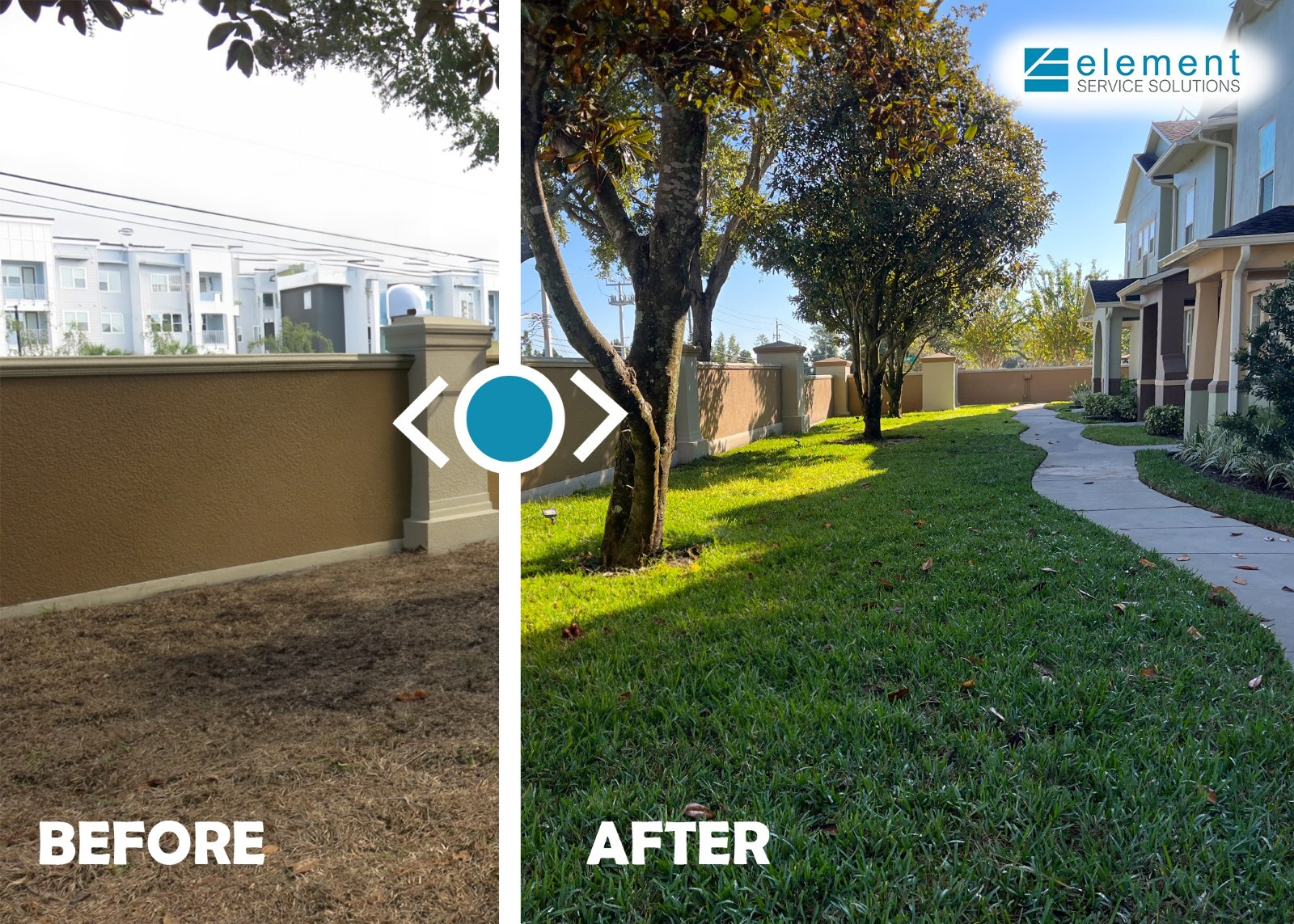
New sod goes down in spring. By fall, the same patch is bare again. The board authorizes another pallet, and the cycle repeats, usually with someone eventually asking whether the landscaper even knows what they are doing.
Most of the time the landscaper is not the problem. The grass was never going to work in that spot, and nobody stopped to ask why before ordering the replacement. That question, why does this specific spot keep failing, is a diagnosis question, and it is worth answering before you get anywhere near a turf selection decision. See why resodding keeps failing for that mechanism: compacted soil, irrigation coverage gaps, root competition, and grade problems that no amount of fresh sod fixes on its own.
This article picks up after that diagnosis. Once you know why the spot is failing, the next decision is what actually belongs there, whether that is a different turf variety, a different kind of groundcover entirely, or accepting that grass is not the answer for that particular square footage.
Test the spot before you buy another pallet
Before ordering anything, walk the failing area and answer these questions. They take fifteen minutes and they will tell you more than a third round of the same sod.
- What time of day does direct sun actually reach this spot? Stand there at three points in the day: mid-morning, midday, and late afternoon. A spot that reads as sunny at noon can be in shade the other ten hours it matters.
- Is there a tree canopy or root system within twenty feet? Roots compete for water and nutrients even where there is no visible shade, and mature trees often win that competition against turf every time.
- Does water pool here after rain, or does it drain within an hour? Walk the spot the day after a heavy rain. Standing water twenty-four hours later tells you this is a chronically wet condition, not an irrigation problem.
- Is this a path residents actually walk, even if it is not a paved one? The shortest line between a parking area and a building entrance often gets worn bare regardless of what is planted there, because feet will always find the shortcut.
- Is this within reach of a dog walking route or a pet relief area? Concentrated pet traffic and pet waste create a chemical and physical load that ordinary turf care does not account for.
- Is the slope steep enough that water runs off rather than soaking in? A grade that sheds water fast dries out even with adequate irrigation, and it erodes new sod before roots can establish.
Whatever the answers, write them down. The condition of the spot, not the appearance of the spot, is what determines the right fix.
Condition-to-solution decision table
| Condition | Likely turf option | Honest non-turf alternative |
|---|---|---|
| Deep, near-constant shade | Shade-tolerant St. Augustine cultivar, and even then only in moderate shade, not deep shade under a full canopy | Shade-tolerant ground cover, mulch bed, or a stepping-surface path if it is a walked area |
| Heavy root competition from mature trees | Generally poor odds for any turf close to the trunk zone | Mulch ring or ground cover extended to the drip line, which also protects the tree's root flare |
| Compacted foot-traffic lane | Zoysia, which tolerates traffic and compaction better than St. Augustine | Stepping pavers or a defined mulched path if the wear pattern is consistent and predictable |
| Concentrated pet traffic or pet waste exposure | More traffic and salt-tolerant cultivars, with realistic expectations about a designated relief area | Mulch, decomposed granite, or a dedicated pet relief surface separate from ornamental turf |
| Chronic wet or standing water | Turf generally struggles here regardless of variety unless the drainage issue is fixed first | Regrading, a French drain, or a planting bed of water-tolerant species instead of turf |
| Chronic dry, reflected heat off pavement | Bahia, which tolerates drought and poor soil better than St. Augustine | Mulch bed or drought-tolerant ground cover, especially in narrow strips between pavement and a wall |
| Steep slope with runoff | Turf with reinforced establishment, but only if the grade allows any water to soak in at all | Erosion-control ground cover, terracing, or a hardscape solution on grades too steep for turf to hold |
Turf types, honestly compared
Central Florida communities generally choose between a few turf families. None of them is the universal right answer. Each one has a condition it tolerates well and a condition it does not.
| Turf type | Sun needs | Traffic tolerance | Where it tends to struggle |
|---|---|---|---|
| St. Augustine (standard cultivars) | Full sun to light shade | Low to moderate | Deep shade, heavy foot traffic, and drought stretches without irrigation |
| St. Augustine (shade-bred cultivars) | Moderate shade tolerant, still needs some direct light | Low to moderate | Full, dense canopy shade with little to no direct sun |
| Bahia | Full sun | Moderate | Any real shade, and it has a coarser, less manicured appearance that some boards do not want on high-visibility areas |
| Zoysia | Full sun to light shade | High | Slower establishment time and generally more demanding maintenance than St. Augustine |
A board choosing turf for a high-visibility entrance is answering a different question than a board trying to stop a side yard from going bare every year. The entrance can usually justify a higher-maintenance cultivar. The side yard that fails every year usually cannot, and that is exactly the spot worth reconsidering as something other than turf.
Timing affects whether new turf actually takes
The same turf variety planted in the right spot can still fail if it goes in at the wrong time of year, and this gets overlooked constantly because a bare patch feels urgent the moment someone notices it.
New sod needs a consistent establishment window with steady moisture and warm soil to root well. Planting during a hot, dry stretch puts new sod under stress before it has any root system to draw on, and it often needs far more supplemental watering than the irrigation system was designed to deliver. Planting right before a heavy, sustained wet stretch can also work against establishment in a poorly draining spot, since saturated soil can suffocate new roots before they take hold.
The practical takeaway for a board approving a resodding request: ask when the work is scheduled and why, not just what variety is going in. A contractor who can explain the timing choice is thinking about establishment odds, not just filling the calendar slot that happened to be open.
Mistakes that waste another season
A few patterns show up again and again in spots that fail more than once, and almost all of them are avoidable with a slower first step.
- Reordering the same variety without asking why it failed. If nobody diagnosed the condition, there is no reason to expect a different outcome from the same product.
- Choosing turf based on what looks best in the display photo, not what the spot can support. A cultivar's marketing appearance says nothing about whether it tolerates that specific spot's shade, traffic, or drainage.
- Skipping the irrigation check. New turf and new ground cover both need reliable water during establishment. If the spot sits in a coverage gap between irrigation zones, no plant choice fixes that on its own.
- Treating the whole property as one condition. A community with ten different micro-conditions, from full-sun entrance beds to a shaded tree ring, should not be re-sodded with a single blanket turf order. Each spot earns its own decision.
- Assuming a non-turf answer will look worse to the board. A defined, edged mulch bed or ground cover planting generally reads as more maintained than a lawn with a permanent bare patch in the middle of it.
What good establishment looks like, and what a repeat failure looks like early
New turf should show visible new growth and a consistent green color spreading evenly across the planted area within the first several weeks, with the sod knitting together at the seams rather than staying in visible individual pieces. Ground cover and shade plantings should show new leaf growth and no dieback at the edges during that same early window.
Warning signs worth flagging early, before a full season is lost, include yellowing that starts at the same spot every time, thinning that follows the same pattern as the previous failure, and any area that needs noticeably more manual watering than the rest of the property to stay green. Those are all signs the underlying condition was not actually addressed, and catching that in the first month is far cheaper than catching it after a full season of decline.
When the honest answer is not grass at all
This is the part of the conversation that is easiest to skip and most valuable to have. Some spots on a property are not turf problems. They are turf-shaped attempts at a spot that was never going to hold grass, no matter how many times it gets resodded.
Deep shade under a mature canopy
If direct sun never reaches the spot, no turf variety solves that. A shade-tolerant ground cover or a mulch bed accepts the condition instead of fighting it, and it stops looking patchy because it was never expected to look like a lawn.
The zone right around a tree's root flare
Turf competing with surface roots loses that competition slowly and expensively, one failed resodding at a time. A mulch ring extended to the tree's drip line removes the competition and also protects the tree, which is often the better outcome for both the landscape budget and the tree's long-term health.
The worn shortcut everyone actually walks
If residents have worn a path between a parking area and a walkway, that is not a discipline problem to solve with signage. It is a desire line, and it will keep winning against grass. A stepping-paver path or a defined mulched trail in that exact spot usually resolves the bare patch permanently, because it stops asking turf to do a hardscape's job.
Narrow strips between pavement and a wall
These strips bake in reflected heat, drain fast, and get the least irrigation coverage on the property. Turf here is a maintenance sink. A drought-tolerant ground cover or a mulch bed with structural planting handles the condition without needing constant babying.
Grades too steep to hold water
On a slope steep enough that irrigation runs off before it soaks in, new sod erodes before it can establish roots at all. Erosion-control ground cover, terracing, or a hardscape retaining solution addresses the actual physics of the slope instead of asking grass to do it.
Concentrated pet traffic areas
A spot that functions as the community's unofficial pet relief area takes a load that ordinary turf care was never designed for, both from repeated foot traffic wearing the same lines and from the concentrated effect of pet waste on that soil. Reordering the same turf here without changing anything else usually produces the same bare, uneven result within a season. A more traffic-tolerant cultivar helps, but a dedicated surface such as decomposed granite or a mulched pet area, positioned intentionally rather than left to happen by default, often solves the problem more permanently and keeps the wear contained to one defined spot instead of spreading.
Quick glossary
| Term | What it means |
|---|---|
| Establishment | The period after planting when new turf or ground cover develops the root system it needs to survive on its own without heavy supplemental watering. |
| Cultivar | A specific bred variety within a turf type, such as a shade-tolerant St. Augustine cultivar, chosen for a particular trait like shade or drought tolerance. |
| Drip line | The outer edge of a tree's canopy, roughly where its root system also extends furthest, and a useful reference point for where root competition with turf begins. |
| Desire line | A worn path that forms from repeated foot traffic taking the shortest route between two points, regardless of what was originally planted there. |
| Ground cover | Low-growing plants used as an alternative to turf, typically chosen for tolerance of shade, slope, or foot traffic conditions that turf handles poorly. |
A pre-purchase checklist for a chronically failing spot
- Confirm the diagnosis first. Know why the current turf failed before selecting its replacement.
- Track actual sun exposure at three points during the day, not an assumption based on the time you happened to walk by.
- Check for standing water the day after a heavy rain, not just during a dry spell.
- Note any tree roots or canopy within twenty feet of the spot.
- Identify whether the spot carries foot traffic, even informal traffic, that a lawn was never built to handle.
- Ask whether the spot is realistically reachable by irrigation coverage, or whether it sits in a gap between zones.
- Get a straight answer on whether a non-turf alternative would look intentional rather than like a failure, since a well-defined mulch bed reads very differently to a board than an unexplained bare patch.
- Put the decision and the reasoning in writing so the next board does not repeat the same resodding cycle without knowing why the last one failed.
How this decision shows up in a proposal
Turf and ground cover work should show up in a proposal as a clearly scoped line, not a vague "landscape restoration" allowance. If a bid does not name the specific product, the specific area, and the specific reason it was chosen for that spot, that is worth asking about before you approve it. See how to read a contractor proposal for what a scope line needs to say to be enforceable.
It also helps to know who is actually walking the property and making this call. A landscape crew that is directly employed and consistently on site tends to catch a failing spot earlier than a rotating subcontracted crew that sees the property only in passing. See in-house crews vs subcontractors for what that consistency actually buys a community.
And if this bare spot is one of several recurring landscape and hardscape issues competing for the same budget cycle, it is worth stepping back and looking at the whole inventory at once rather than reacting to each patch separately. See the concrete inventory on a community property for how that same walk-and-document approach applies to hardscape, which often sits right next to the turf areas that keep failing.
Frequently asked questions
Why does new sod fail in the exact same spot every time?
Because the condition that killed the previous turf, whether it is shade, compaction, root competition, or drainage, is still there. Fresh sod does not change the underlying condition. Until that condition is addressed or the plant choice is matched to it, the pattern repeats.
Is Zoysia always a better choice than St. Augustine for high-traffic areas?
Zoysia generally tolerates foot traffic and compaction better, but it also establishes more slowly and can require more attentive maintenance during that establishment period. For a spot that needs to look good quickly with less maintenance oversight, St. Augustine may still be the more practical choice, provided the traffic load is light to moderate.
Can shade-tolerant St. Augustine cultivars handle deep shade under a full tree canopy?
No. Shade-bred cultivars tolerate moderate shade better than standard varieties, but they still need some direct or filtered light during the day. Under a dense, mature canopy with almost no direct sun reaching the ground, no turf variety performs reliably.
Is switching to mulch or ground cover a sign the association is giving up on the landscape?
It is the opposite in most cases. A well-defined mulch bed or ground cover planting in a spot that structurally cannot support turf looks intentional and maintained. A bare, resodded-and-failed patch looks neglected. Matching the planting to the condition is a maintenance improvement, not a downgrade.
How do we know if the problem is irrigation coverage rather than the turf variety itself?
Check the spot the day after both a rain event and a normal irrigation cycle. If it stays visibly drier than the surrounding lawn after irrigation runs, that points to a coverage gap rather than a variety mismatch, and the fix is adjusting or adding irrigation, not changing the turf.
Should the whole property be reassessed, or just the one failing spot?
Start with the spot that keeps failing, since that is the one costing the association repeated replacement. But if there are multiple chronic trouble spots, it is worth having a landscape professional walk the whole property once and flag every condition at the same time, rather than addressing each one in isolation as it comes up.
If a spot on your property has failed more than once, an on-site walk can tell you whether the fix is a different turf variety or a different kind of planting altogether. Element Service Solutions offers a complimentary on-site inspection to diagnose the condition and recommend what will actually hold up in that exact spot.