The Hidden Cost of Managing Multiple Vendors on One Project
Splitting one project across three trades does not split the work three ways. Learn what a board and property manager actually absorb when nobody...
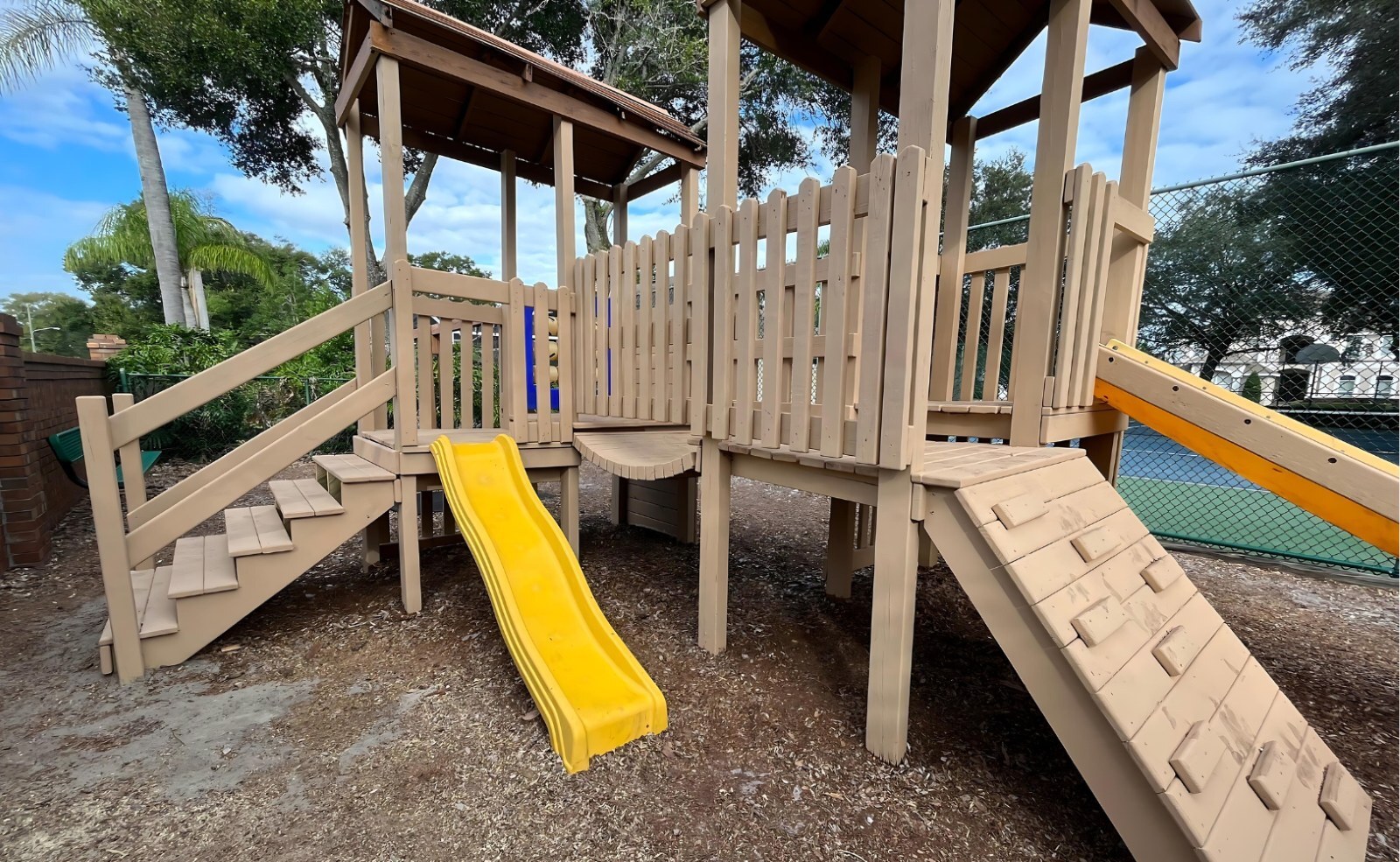
A board member walks the property and sees a crew working on the clubhouse roof. She does not recognize any of them from the last visit. She calls the property manager to ask who they are, and the honest answer is: nobody is entirely sure, because the contract was signed with a general contractor who subcontracted the roofing work to a company nobody on the board has met.
That moment, not the proposal, not the contract language, is where "in-house crew" versus "subcontracted" stops being a procurement detail and starts being a real difference in how a project runs. The two models can look identical on paper. They do not feel identical when something goes wrong at 4:45 on a Friday.
Almost every proposal a board reviews implies one of three staffing arrangements, and the proposal rarely says which one out loud.
In-house. The company that signs the contract also employs the people who show up. The same firm hired them, trained them, insures them under its own policy, and manages their schedule directly. When you call the office, you are calling the same organization that controls the work.
Subcontracted. The company that signs the contract does not perform the work itself. It hires a separate business, sometimes several, to do the actual labor. The general contractor manages the relationship and the paperwork; a different company manages the people on your property.
Hybrid. The company self-performs its core trades with its own employees and brings in specialty subcontractors only for scopes it does not carry in-house, such as fencing, irrigation controls, or elevator work. Most established contractors operate this way to some degree. The question that matters is not whether a contractor ever subcontracts anything. It is which parts of your specific project are self-performed and which are not, and who is accountable for each one.
None of the three is automatically wrong for a community. A well-managed subcontractor relationship, with a general contractor who actually supervises the sub's work, can perform as well as an in-house crew. But the accountability chain, the phone call you make when something is wrong, and the consistency of the people on site do change depending on which model you actually hired. Most boards find out which one they hired after the contract is signed, not before.
With an in-house crew, there is one employer for everyone on your property. If a technician damages a downspout, leaves debris in a drain, or handles a resident conversation badly, the same company that signed your contract is the company responsible for the person, the training, and the fix. There is no second entity to point to.
With a subcontracted crew, the general contractor is still contractually responsible to you, but the person who made the mistake works for someone else. That does not mean the general contractor dodges responsibility. It means the fix now runs through an extra link: the GC has to hear about the problem, relay it to the sub, and confirm the sub actually corrected it, rather than correcting it directly. Every extra link is a place where a message can slow down, get softened, or get lost.
Ask your contractor directly: "If your crew damages something on our property, who fixes it, and how fast?" A contractor with an in-house crew answers that question in one sentence. A contractor relying on subs for the work in question usually needs two sentences, one for what they will do and one for what the sub is contractually required to do. Neither answer disqualifies a bidder. But you should get the honest version before you sign, not after the damage.
This is the question boards care about most and ask about least, because it feels awkward to ask a bidder "who is really going to be on my property." Ask it anyway.
With an in-house model, your point of contact and the people doing the work report up the same chain. A field issue can often be resolved by a single phone call to the office, because the office has direct authority over the crew.
With a subcontracted model, your point of contact at the general contractor has to relay your issue to a company you have never spoken with, whose priorities on any given day are set partly by their other clients, not just by you. If the sub is juggling three job sites that week, your issue waits its turn behind theirs, and you have no direct line to change that.
A useful test during the bidding process: ask each bidder to name, by role, exactly who will be on site for your project, and whether that person is their employee or a subcontractor's employee. A contractor who can answer without hedging has almost certainly already made that staffing decision. A contractor who says "we will figure that out once we're awarded the job" is telling you the accountability chain is not settled yet, and it will be settled without your input. This single point of contact question also belongs in your broader expectations for how a vendor communicates during a project; see our companion guide, evaluating vendor communication, for a full framework you can attach to any award.
Board members and residents notice the same people coming back. It builds a kind of trust that a rotating cast never can, and it matters more on a multi-week or multi-phase project than on a single-day service call.
In-house crews tend to stay assigned to the same accounts over time, because the employer controls staffing and can choose to keep a team on a property it knows. Subcontracted labor is more likely to rotate, because the sub is balancing its own crew across every general contractor it works for, not just yours. A subcontractor with a light week elsewhere may pull a different set of hands onto your job than the ones who walked it during the estimate.
This is not a reason to reject subcontracting outright. It is a reason to ask, specifically: "Will the same lead technician be on this property from start to finish, or will that change during the project?" If continuity matters to your board, especially for a project that touches occupied buildings or resident common areas, put the answer in writing before award, not as an assumption.
When a contractor employs its own crew, it controls hiring standards, background checks, and ongoing training, because the people are on its own payroll. You can ask that contractor directly what its hiring and screening process looks like, and the answer describes the actual people who will be on your property.
When work is subcontracted, the general contractor's hiring standards are irrelevant to the people actually performing the work; what matters is the sub's standards, which the general contractor may or may not have verified closely. Some general contractors maintain an approved subcontractor list with real screening behind it. Others award subcontracts primarily on price and availability. Both look the same in a proposal.
Ask a direct question during vetting: "For the trades you subcontract, do you require background checks or screening from those companies, and can you show me that requirement in writing?" A contractor that has genuinely thought about this will have a policy to describe. One that has not will improvise an answer on the call.
Every contractor on your property should carry insurance that actually covers the work being performed, and your association should be listed as an additional insured on that policy. That much is the same regardless of staffing model. What changes is how many layers of insurance actually exist between your property and a claim.
With an in-house crew, one insurance policy, held by the contractor you hired, covers the people doing the work. With a subcontracted crew, the sub is supposed to carry its own policy, and the general contractor's policy is supposed to sit behind it. That is called insurance flow-down, and it only protects you if the paperwork was actually collected and verified before the sub set foot on the property, not just requested and forgotten.
This article does not replace a full vetting process for the company itself. For the mechanics of checking a license and requesting a certificate of insurance from the agent directly, rather than from the contractor, see our companion guide, how Florida boards vet a contractor before signing. What this section adds is the question specific to staffing: ask whether every subcontractor on the job has been asked to name your association as an additional insured too, not just the general contractor. A gap there is a gap your association would discover only after a claim, which is the worst possible time.
A general contractor with an in-house crew sets the schedule and can move resources when your project needs it, a rain delay pushes a phase, or a resident conflict requires a re-sequence. The decision happens inside one company.
A general contractor relying on a subcontractor for a scope has to negotiate schedule changes with a separate business that has its own commitments elsewhere. A one-day slip on your project can turn into a much longer wait if the sub's crew has already moved to its next job and cannot easily come back. This is one of the least visible costs of a multi-vendor structure, and it compounds on any project with more than one trade involved. For a broader look at what stacking multiple vendors on one project costs a board in coordination burden rather than dollars, see the hidden cost of multiple vendors.
Use this table during bid review. The right-hand column names what your board can actually verify, not what a proposal claims.
| Factor | In-house | Subcontracted | Hybrid | How your board verifies it |
|---|---|---|---|---|
| Who fixes a mistake | Same company, direct | Relayed through the GC to the sub | Depends which trade caused it | Ask for the exact resolution chain in writing before award |
| Point of contact for field issues | Direct line to the crew's employer | Runs through the GC to a third party | Confirm per trade | Ask each bidder to name who is on site and whose employee they are |
| Consistency of personnel | Typically higher | Can rotate based on the sub's other work | Varies by scope | Ask if the lead technician stays for the full project |
| Hiring and screening standard | Set and controlled by the GC directly | Set by the sub, may not be verified | Applies only to subcontracted scopes | Ask for the GC's written subcontractor screening requirement |
| Insurance layers | One policy to verify | Two or more policies must flow down correctly | Verify each subcontracted trade separately | Request a certificate of insurance for every entity performing work, from the agent directly |
| Schedule control | Held internally by the GC | Shared with an outside business | Depends on which phase is subcontracted | Ask how a weather delay or resident conflict gets re-sequenced, and who makes that call |
These questions belong in your bid comparison process, not just your final vetting call. Ask every bidder the same list so answers are comparable side by side.
A bidder who answers all nine without hesitation has almost certainly run this kind of project before and has already made these decisions. A bidder who needs to "check and get back to you" on more than two or three of these is telling you those decisions have not been made yet, which means your board would be the one making them by default, mid-project, under time pressure.
Print this and fill it out for each bidder while the proposals are still fresh.
The most common mistake is not asking the staffing question at all, because it feels like it belongs to the contractor's internal operations rather than to the board's decision. It does not. Who is physically on your property, answerable to whom, is a legitimate procurement question, and any contractor worth hiring will answer it directly.
The second mistake is treating "in-house" as automatically superior and disqualifying any contractor who subcontracts anything. Some trades are legitimately specialized enough that even a large, well-run general contractor subcontracts them, elevator service and certain fencing systems are common examples. The presence of a subcontractor is not the red flag. The absence of a clear answer about who that subcontractor is and how they were vetted is the red flag.
The third mistake is assuming the staffing model from the estimate visit will hold through the entire project. The estimator who walked the property with your manager is not always the person running the job day to day, and the crew on site in week one is not guaranteed to be the crew on site in week four unless continuity was addressed in writing.
The proposal itself often signals which model you are getting, if you know where to look. Language like "our team" or "our crew" throughout the document, paired with a single named point of contact, usually points to an in-house arrangement. Language that separates "scope of work" into distinct sections by trade, with different insurance requirements listed per section, usually signals subcontracting. Neither wording is disqualifying on its own, but it is a clue worth following up with a direct question. For a full walkthrough of how to read a proposal line by line, including what a vague scope line is often hiding, see our companion guide, how to read a contractor proposal.
Not every project needs this level of scrutiny. A single small repair with a short duration, performed by a company with a strong, verifiable track record on similar work, does not usually justify a deep staffing interrogation. The staffing question earns its place on larger projects, projects that touch occupied buildings or resident common areas over multiple weeks, and projects where something has already gone wrong once with a vendor and the board is deciding whether to continue the relationship. Match the level of scrutiny to the size and duration of the work, not to a blanket policy.
Not automatically. A well-managed subcontractor relationship, with real oversight from the general contractor, can perform just as well as an in-house team. What matters is whether the accountability chain, screening, and insurance flow-down are actually in place and verified, not just which staffing model is used.
Ask directly, in writing, as part of the bid comparison: which parts of this scope will you self-perform, and which will you subcontract, and to whom? A contractor who has already made staffing decisions will answer without hesitation. Put the answer in the contract or a signed addendum, not just in an email thread.
No. The company that signed your contract remains contractually responsible to your association regardless of who performed the work. What changes is the number of steps between your complaint and the fix, since the issue often has to be relayed to the subcontractor rather than corrected directly.
For any project of meaningful size or duration, yes. Ask for the names of any subcontracted trades and request certificates of insurance for each one, with your association listed as an additional insured, before the project begins rather than after a problem surfaces.
"Who, specifically, will be on our property, and are they your direct employees?" It is a simple question that most bidders have not been asked before, and the quality of the answer tells you more about how the company is organized than almost anything else in the proposal.
Not necessarily. Most established contractors self-perform their core trades and subcontract only specialized scopes they do not carry in-house. The hybrid model works well as long as the board knows which parts of the project fall into which category and has verified screening and insurance for both.
Element Service Solutions self-performs its core trades with our own crews across Central Florida communities, so the people your board meets during the estimate are generally the same people your residents see on site. If you want a straight answer about who would actually be on your property for a specific project, request a complimentary on-site inspection and ask us the same nine questions above. We would rather answer them before you sign than after.
Splitting one project across three trades does not split the work three ways. Learn what a board and property manager actually absorb when nobody...
Zebra striping on concrete, furred wood, blown mortar joints. A surface guide to spotting pressure washing damage, with a checklist for your next...
A proposal from last budget season may not reflect today's numbers. Learn what actually moves underneath a construction estimate and how to budget...