10 min read
Sequencing a Year of Community Projects in the Right Order
Gavin Sederopoulos : Published
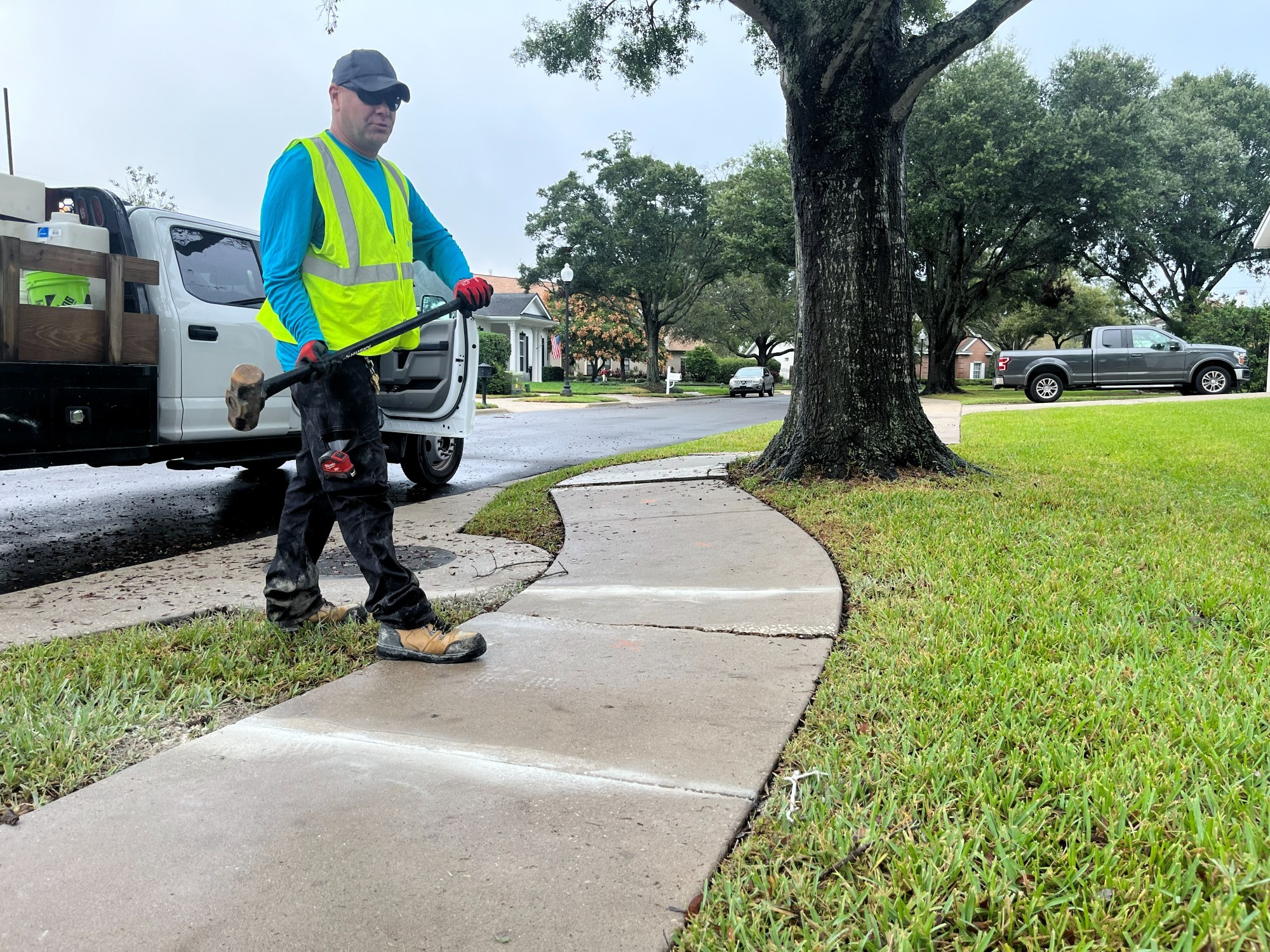
A board approves three projects for the year: a concrete repair program, a repaint, and a drainage correction with new sod to follow. Each one gets its own proposal, its own vote, and its own line in the budget. Then someone builds the calendar by asking a simple question for each project: when is the vendor available? That question feels reasonable and produces a schedule that looks complete. It also, more often than boards expect, produces a schedule that guarantees rework, because it never asked the other question: does the order these projects happen in matter?
It does. Painting a wall the week before the concrete crew starts grinding twenty feet away means that wall gets re-cleaned or repainted before the project is even finished. Laying new sod over a swale that has not been regraded yet means that sod gets torn up again within the season. Repainting a wall below a roof edge that has not had its gutter fault corrected means the same stain reappears within a year. None of these are unusual mistakes. They are the predictable result of scheduling projects independently when the projects are not actually independent of each other.
This article is about the order separate projects happen in across a year, not the order of steps inside any single project. If you are trying to work out the pour sequence and access phasing for one concrete repair job, that is covered on its own in Sequencing a Concrete Repair Around Access. Here, the concrete job is one block on the calendar. The question is what goes before it, what goes after it, and why getting that wrong costs the association more than it needed to, without putting a number on what that cost is.
The general principle
Nearly every sequencing conflict on a community property comes down to one rule: work that generates dust, debris, water, or excavation goes before work that finishes a surface. Grinding, demolition, pressure washing, drainage correction, and any digging disturb the areas around them. Painting, sealing, sod installation, and any other finish work are vulnerable to exactly that disturbance for a period after they are completed. Schedule the disturbance first, let it settle and get cleaned up, then finish. Schedule it in the other order and the finish work absorbs damage from work that was always coming.
It sounds obvious stated this plainly. It gets missed constantly in practice because projects are rarely approved, proposed, or scheduled together. A board might approve a repaint in the spring budget cycle and a concrete program in the fall cycle, each moving through its own vendor and its own timeline with no single person holding both calendars side by side and asking whether they are about to collide.
Common trade pairs and which one goes first
The table below covers the pairings that come up most often on Florida community properties. It is not exhaustive, but it covers the majority of collisions a board is likely to run into across a normal year of capital and maintenance work.
| Project A | Project B | Which goes first | Why |
|---|---|---|---|
| Concrete repair or replacement | Painting or coating work nearby | Concrete first | Grinding, cutting, and demolition throw dust that settles on wet or newly cured finish and is difficult to remove without damaging the coating |
| Drainage or grading correction | Sod or landscaping installation | Drainage first | New sod laid over ground that still needs to be regraded gets disturbed again when the correction happens, and root establishment resets |
| Roof, gutter, or roof edge repair | Painting the wall below | Roof and gutter first | An uncorrected leak or gutter fault re-stains the freshly painted wall, sometimes within one season |
| Pressure washing | Painting or sealing | Pressure washing first, with time to dry | Coatings applied over a damp or still-soiled surface fail to bond properly and lift early |
| Fence, wall, or hardscape repair | Final grading and sod near that structure | Structure repair first | Equipment access for the repair disturbs finished grading and planting nearby |
| Irrigation repair | New sod installation | Irrigation first | Trenching or line repair after sod is down tears up the new turf to reach the same ground |
| Any excavation or utility work | Any finished hardscape or landscape feature above it | Excavation first | Digging beneath a finished feature after the fact undoes the finish to reach what is below it |
The two ways getting this wrong causes rework
Out-of-order scheduling causes damage through two distinct mechanisms, and it helps to know which one you are looking at, because they are corrected differently.
Contamination
The first is straightforward physical contamination. Dust from grinding settles on a wet coat of paint and has to be sanded or recoated. Debris from demolition scatters onto a surface that was already finished. Soil from grading work splashes onto a wall or a walkway that was just cleaned. In every case, the finished work was not damaged by a defect in the work itself. It was damaged by a second project happening too close in time or space to the first.
Rework from disturbance
The second is deeper: finished work gets physically torn up or undone because something underneath or behind it needed to change. New sod gets removed to fix a swale. A finished wall gets opened again because an irrigation line needed rerouting through it. A section of paving gets cut out because an access point for a later project runs directly through it. This kind of rework costs more than contamination, because it is not a cleaning or a touch-up. It is doing part of the finished project over, on top of doing the disturbance project that should have happened first.
Both mechanisms are avoidable with the same fix: identify which projects on the approved list generate disturbance and which ones finish a surface, and hold the finish work until the disturbance work in the same area is done.
Building a sequence from an approved project list
Most boards are not sequencing one project at a time. They are looking at a list of several approved projects for the year and trying to work out a calendar. The process below is a simple way to build that calendar so the order, not just the vendor availability, gets decided on purpose.
| Category | What belongs here |
|---|---|
| Disturbance-generating work | Demolition, grinding, excavation, drainage correction, pressure washing, irrigation repair, any trenching |
| Finish work | Painting and coating, sealing, sod and planting, final grading, decorative hardscape, any surface treatment meant to be the last step |
| Neither, usually schedule-neutral | Inspections, surveys, minor hardware repair, and other work that neither disturbs an area nor finishes a surface others depend on |
- Sort the list into two categories. Disturbance-generating work versus finish work, using the reference table below as a starting point.
- Map each project to its physical footprint. Which buildings, walkways, or common areas does each project actually touch or sit adjacent to? Two projects with no overlapping footprint can usually be scheduled independently of each other without a sequencing conflict.
- Flag every pair with overlapping footprints. Wherever a disturbance project and a finish project share a footprint, or sit close enough that dust, debris, or water from one could reach the other, that pair needs to be sequenced deliberately rather than scheduled by whichever vendor calendar opens up first.
- Order the disturbance work ahead of the finish work in every flagged pair. This is the step that actually resolves the conflict. It usually means the disturbance project's calendar drives the finish project's start date, not the other way around.
- Build in a buffer between the disturbance work finishing and the finish work starting. Dust settles, ground compacts, and new plantings need time to establish before the next crew moves through the same area. A buffer of a few weeks between a disturbance project's completion and a finish project's start, in an overlapping footprint, is generally enough to avoid most contamination and disturbance issues, though the right buffer depends on the specific pairing and should be confirmed with each vendor.
- Revisit the sequence whenever a project slips. A rain delay on the concrete program, a permitting delay on drainage work, or a vendor's own schedule shift can quietly put a finish project back in front of a disturbance project it was originally sequenced behind. The sequence is a living document for the year, not a one-time exercise done in January.
What out-of-order scheduling actually costs, in effort rather than dollars
Getting the order wrong does not usually show up as an extra invoice line labeled for the mistake. It shows up as added scope folded into a later project, a vendor asked to touch up or redo something that should have been done once, or a finished area that has to be revisited a second time within the same year. The table below names what typically has to happen when common pairs run out of order, without attaching a figure to any of it, because the actual cost varies by property and by how far along the finish work already was when the disturbance hit it.
| Out-of-order mistake | What typically has to happen next |
|---|---|
| Painting scheduled before nearby concrete work | Affected sections get cleaned, sanded, or recoated once the concrete work is finished and the dust has settled |
| Sod installed before a drainage correction in the same area | The new sod is removed or replaced once the correction opens up the ground beneath it |
| Repaint completed before a gutter or roof edge fault is corrected | The stained section is repainted a second time after the actual source is finally addressed |
| Finish grading completed before a fence or hardscape repair nearby | Grading and any planting near the repair site is redone once equipment access for the repair is finished |
| Sod installed before irrigation repair in the same zone | Turf is disturbed a second time when trenching reaches the irrigation line underneath it |
When sequencing does not matter as much
Not every pair of projects on an approved list needs this level of coordination, and it is worth being honest about that rather than treating every project as a sequencing risk. Two projects on opposite sides of a large property, with no shared footprint and no shared access route, can usually be scheduled around vendor availability without much risk of one contaminating or disturbing the other. The sequencing discipline described here matters specifically where projects overlap in space or share a boundary, not across every line on the annual project list. Spending the same level of coordination effort on projects that were never going to conflict is its own kind of waste.
Coordinating the sequence across more than one vendor
A sequence is only as reliable as the vendors executing it are willing to hold to it. When separate companies are handling the disturbance project and the finish project, each one needs to know not just their own schedule but where they sit relative to the other. A short coordination conversation before either project starts avoids most of the collisions described above.
| Question to ask each vendor | Why it matters |
|---|---|
| Does your schedule assume you are the only active project in this area during your window? | Surfaces an assumption that may not hold once the full annual sequence is mapped |
| What happens to your schedule if the project ahead of you slips? | Confirms whether the vendor has flexibility built in or a fixed start date that will not move |
| Will your crew need access through or near an area another vendor already finished? | Catches footprint overlaps that were not obvious from the project descriptions alone |
| How much time do you recommend between your work finishing and finish work starting in the same footprint? | Gives the board a vendor-informed buffer rather than a guessed one |
| Who is responsible if your work damages something finished just before you started? | Establishes accountability before it becomes a dispute after the fact |
Coordination gets considerably easier when fewer companies are involved, since a single point of contact can hold the whole sequence rather than several vendors each managing only their own piece. If your board is weighing whether to move toward fewer vendors covering more trades, the due diligence worth doing before that move, and when it is not the right call, is covered in Before You Consolidate to One Contractor. Running several vendors instead has its own coordination burden, covered in The Hidden Cost of Multiple Vendors.
Where sequencing meets the seasonal calendar
Sequencing decisions do not happen in a vacuum. Certain project types have a narrower window in which they make sense in Central Florida, and that window can force the order of an annual plan on its own. Exterior coating work, for example, holds up best when it is scheduled and completed during the dry season rather than rushed through the wet months, which is covered in The Dry-Season Painting Window. When a disturbance project needed ahead of a repaint runs long and pushes into that same window, the board is choosing between delaying the repaint to the following dry season or accepting a rushed, out-of-order schedule. Knowing that trade-off exists before it becomes urgent is most of the value of building the sequence early in the year rather than reacting to it as each project approaches.
Where sequencing fits into the annual budget conversation
Sequencing is a scheduling discipline, not a pricing one, but the two conversations happen at the same table. A project list assembled during budget season should already reflect which items depend on which, since that shapes not just when work happens but which recurring maintenance lines need to be funded to support it, covered in The Recurring Lines That Get Left Out. What this article does not cover is how material and labor market movement affects a proposal's shelf life once it has been sequenced into a future quarter; that question is answered separately in Budgeting When Construction Prices Move.
A simple test before finalizing next year's calendar
Before a board locks in the calendar for an approved project list, it is worth running every pair of projects through one question: if these two projects happened in the opposite order from how they are currently scheduled, would either one damage or undo the other? The table below turns that single question into a quick pass a board can run down its own project list.
| Question for each project pair | If the answer is no | If the answer is yes |
|---|---|---|
| Do the two projects share a footprint or a boundary? | Schedule independently around vendor availability | Continue to the next question |
| Would running them in the opposite order damage or undo either one? | Order is flexible; sequence by convenience | Lock this pair into a deliberate order before building the rest of the calendar |
| Is one of the pair disturbance-generating and the other finish work? | Reassess which category each project actually falls into | The disturbance project goes first, with a buffer before the finish project starts |
Frequently asked questions
Who is responsible for catching sequencing conflicts when different vendors are handling each project?
In practice, this responsibility often falls to the property manager or board by default, simply because no single vendor sees the whole annual list. A vendor can flag conflicts within their own project, but they are not positioned to know what else the board approved separately unless someone shares the full calendar with them. Building and holding that master calendar is a management task, not a trade task.
Should the board always delay a finish project rather than risk it running ahead of a disturbance project?
Where the two share a footprint, yes, holding the finish project until the disturbance work is done and settled is the safer default. Where the projects do not overlap in space, there is usually no reason to hold either one back waiting on the other.
What if a disturbance project runs long and threatens to delay a finish project past its ideal seasonal window?
This is exactly the kind of trade-off worth surfacing to the board directly rather than letting the calendar quietly resolve it by running the projects out of order. Delaying the finish project to the next suitable window is usually the better outcome, even though it means waiting longer, because the alternative is finish work that has to be partly redone.
Does this kind of sequencing apply to smaller, routine maintenance items as well as larger capital projects?
The same logic applies, but the stakes are usually smaller. A quick touch-up near an area getting pressure washed the same week is a minor inconvenience, not a major rework problem. Sequencing discipline matters most where the projects involved are substantial enough that redoing part of one would be a real setback, not just an annoyance.
How far in advance should a board build this kind of sequence for the year?
As early as the projects are approved, ideally during the same budget cycle that funds them, rather than waiting until each project is ready to be scheduled individually. Building the sequence early is what allows the board to catch a conflict while there is still room to adjust either project's timing, rather than discovering it once both vendors are already mobilized.
Is it reasonable to ask a single contractor to hold the sequence across multiple trades on their own crews?
Yes, and it is one of the practical advantages of working with a contractor who genuinely self-performs more than one of the trades involved. A single company scheduling its own concrete, drainage, and painting crews against one internal calendar has less coordination risk than the same three trades split across three separate vendors who each only see their own piece of the year.
If your board is looking at an approved project list for the coming year and wants a second set of eyes on the order before the calendar gets locked in, Element Service Solutions offers a complimentary on-site inspection to walk the property, map how the approved projects overlap, and help the board sequence the year before the first vendor mobilizes.