11 min read
Skip the Final Walk-Through and the Punch List Finds You Later
Gavin Sederopoulos : Published
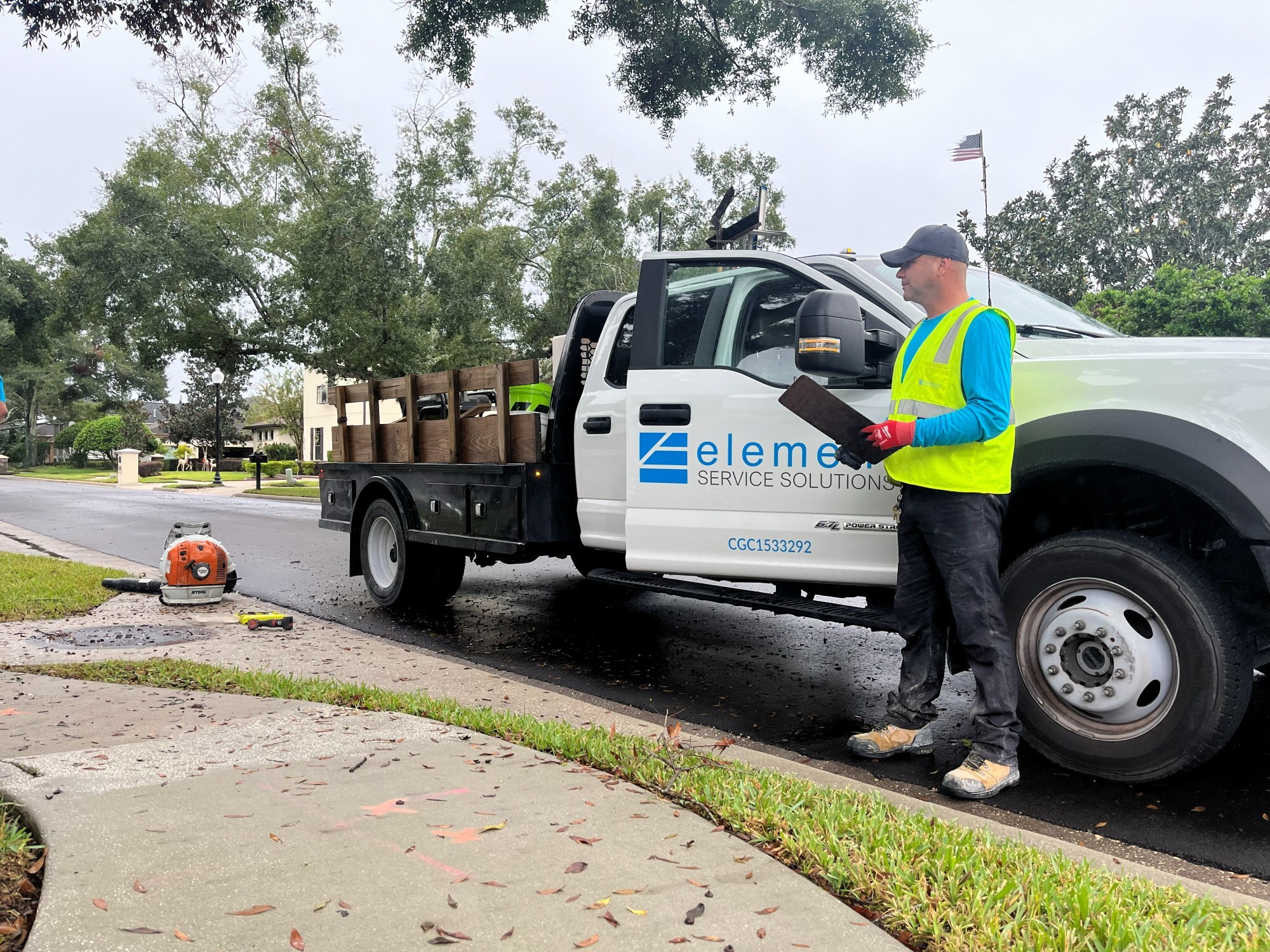
The crew packs up on a Friday afternoon. The equipment goes back on the trailer, the material staging area is cleared, and the job is marked complete. Everything visible looks finished: the new fence is standing, the concrete is poured, the building has a fresh coat of paint. Nobody on site that day flags a problem, because nothing looks wrong from where anyone is standing.
A week later, the board or the property manager walks the same job with the written scope in hand instead of just their eyes, and the list starts. Hardware that was never reinstalled. A section of caulking that was skipped near a corner. Overspray on a light fixture nobody noticed until the sun hit it at a different angle. None of these are catastrophic on their own. Together they are exactly the kind of thing a final walk-through, done properly, on site, before the crew ever left, should have caught before anyone else had to.
This is a guide to what that walk actually is on the contractor's side: what a crew leader or supervisor should be checking before calling a job done, why it has to happen on site rather than from a folder of photos back at the office, and what a board can require in writing so this discipline is not left to chance on their property. It does not cover how a board runs its own punch list review once one is handed to them. That is a separate step with its own separate guide.
What close-out actually means before a board ever sees it
"The job is done" and "the job has been verified against the scope" are two different claims, and the gap between them is where most punch lists come from. A close-out walk is the contractor's own internal check: a final, on-site review of the completed work, performed before equipment and crew fully leave the property, that compares what was actually done against what the written scope said would be done.
Done well, this is not a quick lap around the property with a general impression of "looks good." It is a specific, item-by-item comparison, checking the same document the board approved against what is physically standing on the ground. Done poorly, or skipped entirely, the first real comparison against the written scope happens whenever the board or property manager gets around to it, which is often the first time anyone catches a gap the crew could have fixed in minutes while they were still on site with the right tools and materials in hand.
"Looks finished" versus "matches scope"
These sound like the same standard from a distance and are not. "Looks finished" is a judgment made by eye, usually from a normal walking distance, and it is heavily influenced by whatever the biggest, most visible element of the job is. "Matches scope" is a judgment made against a written document, checked at close range, item by item, including the parts of the job that are small enough to be invisible from ten feet away.
| Trade | Looks finished | Matches scope |
|---|---|---|
| Painting | Fresh, even coat visible from the street or the parking lot | Hardware, covers, and vents reinstalled; overspray removed from adjacent surfaces like concrete, glass, and fixtures |
| Concrete | New slab is poured, cured enough to view, and free of obvious cracks | Control joints tooled and sealed as specified; forms and stakes fully removed; adjacent surfaces cleaned of residue and staining |
| Fencing | Panels are standing and the gate closes | Gate latch and hinge function tested under actual use, not just observed at rest; alignment checked after any settling |
| Pressure washing | Surfaces read visibly cleaner from a normal viewing distance | Nearby fixtures, address numbers, and plantings free of overspray or chemical residue; debris cleared from drains, not pushed into them |
| Stucco or coating repair | The patched area reads smooth and blended from across the street | Texture and coloring blended at the edges under close, direct light, not just at a glance |
The pattern in every row is the same. The distance view confirms the big, obvious element of the scope got done. The close view confirms the details around it, the ones that take longer to check and are easiest to skip, actually match what was promised on paper.
What a final walk actually checks
A close-out walk that is worth the name works through a short, specific sequence rather than a general impression. The starting point is the same document the board reviewed before awarding the job in the first place. If your board has not read How to Read a Contractor Proposal Line by Line, that is worth doing before a close-out walk even happens, since a vague scope gives a crew leader nothing specific to check against.
Item by item against the written scope
Every line in the scope gets checked individually against what is physically on site, rather than confirming the job "looks like what was proposed" as a whole. This is the difference between a five-minute drive-by and an actual verification.
Incidental areas touched during the work
Staging areas, access paths, and any surface adjacent to the primary scope that took incidental contact during the job get checked for restoration, not just the primary work area itself. A crew that did excellent work on a fence line but left a staging area rutted and unraked has not finished the job.
Punch items documented in writing, on the spot
Anything found during the walk that does not match the scope gets written down, with a location and a description, before the crew demobilizes, rather than agreed to verbally and left to memory. A verbal "yeah, we'll come back for that" with no record is how a small item turns into a forgotten one.
Materials, debris, and equipment fully cleared
The site should be confirmed clear of leftover material, packaging, and equipment before the crew is considered gone, not left for someone else to notice and report later.
Why on-site sign-off beats a photo review at the office
Some close-out processes happen entirely at a desk: the crew sends a set of photos, someone at the office looks them over, and the job gets marked complete without anyone walking the property a second time. This is faster, and it is also a weaker check than it looks like on paper, for a few specific reasons.
A photo is framed and lit by the person taking it. Nobody photographs their own weakest work from its worst angle. This is not usually deception, it is just human nature: a crew member who thinks the job looks good takes a picture that shows the job looking good. A second set of eyes on site, checking against the scope rather than against a photo someone else selected, catches what the photo was never going to show.
A photo also cannot test function. It cannot tell you whether a gate swings freely and latches under its own weight, whether a downspout is actually discharging where it should, or whether a patched section flexes differently than the surrounding surface underfoot. Some parts of a scope can only be verified by someone physically present, touching and testing, not looking at a still image.
And distance and angle hide exactly the kind of small issue that ends up on a punch list. Overspray on a fixture, a tooling line left rough on a control joint, a slight color variance in a patched section, all of these are close-range observations. A photo taken from a normal working distance, in whatever light happened to be available that day, is not built to catch them.
What gets missed without a final walk, by trade
Every trade has its own list of small items that tend to fall through when nobody does a dedicated close-out check. This is not an exhaustive list, but it is the pattern that shows up most often.
| Trade | What typically gets missed without a final walk |
|---|---|
| Painting | Hardware not reinstalled or reinstalled loosely; overspray on adjacent trim, glass, or fixtures; touch-up spots skipped near corners and edges |
| Concrete | Control joints left unsealed; saw-cut edges left rough; staining or bonding agent residue on adjacent walkways left uncleaned |
| Fencing | Gate alignment not checked after settling; latch not adjusted for actual use; temporary bracing left in place |
| Pressure washing | Chemical residue left on plantings or light fixtures; debris pushed into drains rather than fully removed |
| Stucco or coating repair | Texture mismatch visible only at close range; edges not feathered into the existing surface; color variance apparent only in direct light |
| Landscaping or turf work | Bed edges not cleanly defined; irrigation heads buried, misaligned, or left uncovered after regrading |
Why this matters more on occupied community property
A close-out walk carries more weight on an occupied residential property than it does on a vacant construction site, and it is worth saying plainly why. On a new-build site, a punch item sits behind a fence until someone gets to it, and nobody's daily routine depends on it in the meantime. On a community association property, residents are walking past that fence gate, using that pool deck, parking near that repaved section, the same week the crew leaves. A latch that does not catch, a walk-off area that was never swept, a section of turf left rutted from equipment, these are not abstractions until the board gets a call. They are a resident's actual experience of the property that same afternoon.
That is also why speed matters as much as thoroughness. A punch item caught during a same-day close-out walk gets corrected while the crew and equipment are still on site, often within minutes. The same item discovered a week later, after the crew has already moved to another job, usually means scheduling a separate return trip, coordinating access again, and asking residents to tolerate a problem for longer than it should have existed in the first place. The close-out walk is not just a quality check. On occupied property, it is the difference between a same-day fix and a second disruption.
Who should be doing the walk
The person best positioned to run a close-out walk is someone with oversight of the whole job against the whole scope, not exclusively the individual who executed a single piece of it. This is not a comment on skill. It is simply harder to catch a gap in your own work when you already believe the job is finished. A second set of eyes, even briefly, checking the same items against the same written scope, catches what a single perspective tends to miss.
That does not require a large process. On most jobs it means a supervisor or crew leader spending a focused pass through the scope before signing off, rather than the same hands that installed each item also being the only judge of whether it matches what was promised.
Common mistakes in a contractor's close-out process
- Treating a drive-by from the truck as the final walk. A slow pass with the windows down confirms the big, visible element of the job. It does not check hardware, joints, or adjacent surfaces.
- Relying only on the crew's own photos instead of a second person walking the site with the scope in hand.
- Comparing the finished work to a general sense of "looks good" rather than to the specific lines in the written scope.
- Closing out several properties in a single day without a dedicated, documented walk for each one individually.
- Leaving punch items to a verbal understanding instead of a written list, with locations, before the crew demobilizes.
- Not dating and recording who conducted the walk, which leaves no record that a close-out check happened at all if a question comes up later.
A close-out standard a board can attach to any award
A board does not have to take a contractor's close-out discipline on faith. Requiring a defined close-out process, in writing, as part of any award is a reasonable and increasingly common ask. The following can be attached as a short exhibit to a contract or purchase order.
- A final walk occurs on site before equipment and crew fully demobilize, not after the fact from photos or memory.
- The walk checks the completed work item by item against the written scope, not a general visual pass.
- Any items that do not match the scope are documented in writing, with location and description, before the crew leaves the property.
- Photos taken during the close-out walk are dated and identify the specific location shown.
- The walk is conducted or reviewed by someone with oversight of the whole scope, not solely the person who executed each individual task.
- A completion date and the name of who conducted the walk are recorded and available to the property manager on request.
None of this needs to be complicated or adversarial. Most established contractors already run some version of this process and will not object to putting it in writing. A contractor who resists documenting a close-out standard at all is telling a board something worth noting before, not after, the award.
What a close-out record should contain
Whatever form it takes, a close-out record only functions as a record if it captures a few specific fields. A folder of undated photos with no notes attached is not a record, it is a pile of evidence nobody can interpret later without asking someone to remember what happened.
| Field | Why it belongs in the record |
|---|---|
| Date of the walk | Establishes when the check actually happened relative to when work was declared complete. |
| Who conducted it | Identifies accountability if a question comes up later about whether the walk was thorough. |
| Scope reference | Ties the walk to the specific proposal or contract line items being checked, not a general impression of the job. |
| Items confirmed complete | Documents what was actually checked and passed, not just what failed. |
| Punch items identified | Each item needs a location, a description, and ideally a target date for correction. |
| Photos, dated and location-tagged | Photos without a date or a stated location are difficult to match back to a specific finding weeks later. |
| Sign-off | A name and role attached to the record, confirming someone stood behind the walk. |
What happens after the walk
Once a contractor's own close-out walk is complete and any punch items are documented, that record becomes the starting point for the property's own review, whether that is the property manager, the board, or both. How a board should run that review, verify the items on the list, and decide when a job is truly ready for final sign-off is its own process with its own considerations, covered separately in Punch List: The Board's Acceptance Process. The two steps are connected but distinct, and a contractor's internal close-out discipline is what determines how short that board-side list turns out to be.
A close-out standard is also worth weighing alongside how a bidder handles the rest of the relationship. What a Licence Check Does Not Tell You covers what verification alone does not establish about how a company actually operates on your property, and a documented close-out process is one of the clearer signals available once licensing and insurance have already checked out. It is also a fair question to put directly to references: Checking References Properly covers how to ask a past client whether punch items showed up after the crew left, and how many. And if your board weighs contractor tenure as part of an award decision, a vendor who already knows a property's quirks is often the same vendor whose close-out walks catch fewer surprises, which is one more thread in Vendor Continuity and the Cost of Switching.
Frequently asked questions
Should the board expect a written close-out record, or is a verbal "we're done" enough?
A written record is the reasonable standard, not an unusual request. A verbal confirmation leaves no way to check later whether a walk actually happened, who conducted it, or what was checked. Requiring a dated record with the reviewer's name is a small ask that closes a real gap.
Does a contractor's close-out walk replace the board's own final review of the work?
No. A contractor's close-out walk is an internal quality check on their side, meant to catch gaps before the crew leaves and before the board ever sees the job. The board's own review is a separate step that happens afterward and is covered in a different guide. Neither one substitutes for the other.
How long after the visible work finishes should the close-out walk happen?
Ideally the same day, before the crew and equipment leave the property, so that any items found can be corrected immediately rather than requiring a return trip. A close-out walk conducted days or weeks later, after the crew has already moved to another job, defeats much of the purpose.
What if punch items are found weeks after the crew already left?
That usually means the close-out walk either did not happen or was not thorough. It does not mean the items are no longer the contractor's responsibility. A written scope remains the standard regardless of when a gap against it is discovered, though items found much later can be harder to distinguish from normal wear versus original workmanship.
Does a close-out standard need to be written into the contract, or can it be a verbal expectation?
Written is stronger. A verbal expectation is easy to forget under the pressure of a busy schedule and hard to enforce if a dispute comes up later. Attaching a short close-out standard as an exhibit to the award costs little and gives the board something specific to point to if the process is skipped.
Is a close-out walk only relevant for large projects, or does it matter on smaller jobs too?
It matters at almost any scale. Small jobs are actually where a dedicated close-out walk is most often skipped, because the job feels too minor to warrant a formal check. The items that end up on a punch list, hardware, touch-up, debris left behind, are just as likely to appear on a small repair as on a major project.
If your community wants a second, independent set of eyes on a job before it is called finished, or wants help building a close-out standard into your next award, Element Service Solutions offers a complimentary on-site inspection to walk the work against the scope and tell you plainly what stands and what does not. Learn more at elementbiz.com.